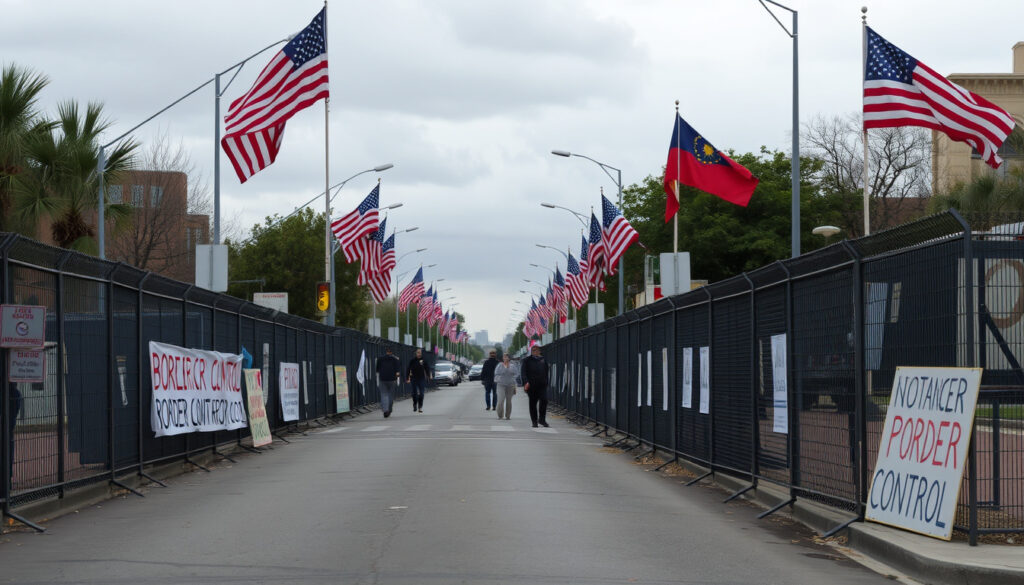
Anti Immigration Protest – Causes, Locations, Government Responses
Anti-immigration protests have erupted across multiple Western nations since 2022, marking one of the most significant periods of social unrest tied to migration policy in recent history. These demonstrations, ranging from peaceful rallies to violent riots, have reshaped political debates in the United Kingdom, Ireland, and the United States, drawing attention from policymakers and international observers alike.
The protests emerged from a convergence of factors, including economic anxieties, housing shortages, and misinformation spread through social media platforms. Authorities have struggled to balance the right to peaceful assembly with the need to maintain public order, leading to thousands of arrests and deploying significant police resources. The movement has mobilized far-right groups while also triggering counter-demonstrations by anti-racist organizations.
This article provides a comprehensive overview of the causes, locations, government responses, and broader implications of anti-immigration protests across affected nations.
What Caused the Recent Anti-Immigration Protests?
Anti-immigration protests did not arise from a single cause. Instead, multiple social, economic, and political factors converged to create conditions ripe for unrest. Researchers and officials have identified several interconnected triggers that fueled demonstrations across different countries.
In the United Kingdom, the immediate catalyst was the Southport stabbings in July 2024, where three girls were killed at a children’s dance class. Misinformation about the perpetrator spread rapidly across social media platforms, incorrectly identifying the suspect as an asylum seeker. This false narrative ignited violence that spread across 27 towns and cities between July 30 and August 7, 2024, making it the most widespread civil unrest in Britain since the 2011 riots.
Housing pressures have compounded public frustration. In Ireland, approximately 15,000 people were homeless while the country received 65,000 refugees, creating intense competition for limited accommodation. The UK faced similar strains as asylum seekers were housed in hotels, prompting protests in communities where locals felt their resources were being diverted.
The 2024 UK riots demonstrated how quickly misinformation on social media can escalate into physical violence. A single false claim about a suspect’s background was sufficient to trigger nationwide unrest involving thousands of participants.
Multiple contributing elements typically combine to spark anti-immigration protests: economic insecurity, housing shortages, cultural anxiety, and the rapid spread of unverified claims online create a volatile mixture.
Economic and Social Pressures
Economic insecurity has consistently emerged as a driver of anti-immigration sentiment. Rising living costs, limited affordable housing, and competition for jobs have created an environment where migrants are sometimes framed as competitors for scarce resources. In Ireland, the national housing crisis meant local residents increasingly viewed incoming refugees as a threat to their housing prospects.
Cultural anxieties also play a significant role. Protesters in various countries have expressed concerns about changing community demographics, loss of local identity, and the perceived erosion of traditional social structures. These concerns, while often rooted in prejudice, have been amplified by political figures and media outlets that frame immigration as a zero-sum game.
The Role of Misinformation
Digital platforms have proven instrumental in spreading false information about migrants and immigration policy. In the UK, the rapid dissemination of claims about the Southport stabbing suspect—later revealed to be incorrect—demonstrated how quickly fabricated narratives can mobilize large groups of people. Similar patterns appeared in Ireland, where social media posts about crimes allegedly committed by asylum seekers were shared thousands of times before verification.
Far-right organizations have systematically used these platforms to amplify divisive content, recruit supporters, and coordinate protests. Groups including Britain First, UKIP, the Homeland Party, and Patriotic Alternative in the UK have been identified as key organizers in 2025 demonstrations, while similar networks operate in Ireland and the United States.
Key Takeaways
- Anti-immigration protests stem from interconnected economic, housing, and cultural anxieties rather than isolated grievances.
- Social media misinformation has repeatedly served as an immediate trigger for violent demonstrations.
- Far-right organizations actively exploit public concerns about immigration to mobilize supporters.
- Housing shortages have intensified competition perceptions between local residents and migrants.
- Violent incidents involving migrants receive disproportionate media attention, fueling fear and anger.
- Counter-narratives from official sources often fail to reach audiences already consuming alternative media.
- Economic policies affecting housing and employment directly impact anti-immigration sentiment.
Snapshot of Key Facts
| Fact | Value | Context |
|---|---|---|
| UK Protest Start | July 30, 2024 | Following Southport stabbings |
| UK Towns Affected | 27 | England and Northern Ireland |
| Ireland Protest Origin | November 2022 | Anti-shelter demonstrations |
| UK Arrests (2024) | 1,280+ | Official police figures |
| UK Charges Filed | 796 | By early September 2024 |
| Irish Refugees (2022-2024) | 65,000 | asylum seekers received |
| UK Officers Injured (2024) | 100+ | Northern Ireland alone |
| Ireland Homeless | 15,000 | National housing crisis |
Where Are Anti-Immigration Protests Taking Place?
Anti-immigration protests have occurred across multiple countries, with the United Kingdom and Ireland experiencing the most sustained and intense demonstrations. Understanding the geographic spread of these events helps contextualize the broader movement.
United Kingdom
The UK saw the most intense protests in summer 2024, with demonstrations spreading across 27 towns and cities between July 30 and August 7. The unrest was concentrated in England, though Northern Ireland also experienced significant violence earlier in 2024. In 2025, protests have continued since March, with notable gatherings in locations including Tamworth, where approximately 150 protesters gathered outside a hotel that had been attacked the previous year. Police have monitored over 100 potential riot locations and 30 counter-protests as the year progresses.
Demonstrations frequently target hotels housing asylum seekers, as well as mosques and other facilities associated with migrant communities. The geographic pattern reveals protests in both urban centers and smaller towns, suggesting the movement has grassroots elements alongside organized far-right activity.
Ireland
Ireland’s anti-immigration protests began in November 2022, initially focused on opposition to asylum seeker shelters. The movement intensified with violent incidents, including a February 2023 attack on a refugee camp on Sandwith Street, where anti-immigration groups set fire to temporary accommodations before Gardaí and fire services intervened. In March 2024, protests in Coolock opposed the conversion of a former factory into asylum housing, with participants described as including a “criminal element” and individuals with connections to far-right organizations.
More recent escalations have occurred in Northern Ireland towns like Ballymena, where protests followed sexual assault charges against Romanian teenagers, and in Waterford, where incidents included assaults on children. A broader wave of protests hit Dublin in 2025 amid the ongoing housing crisis.
United States
While specific details on US anti-immigration protests remain limited in available sources, demonstrations have been documented as part of the broader Western surge. President Trump’s second term placed immigration enforcement at the center of national policy, which has influenced public discourse and mobilization. American protests align with global patterns, accusing migrants of crime, cultural erosion, and resource strain.
Direct sources for specific US protest locations, participant numbers, and violence incidents are limited. Available evidence suggests American demonstrations are less systematically documented than those in the UK and Ireland, making comprehensive reporting challenging.
Other Countries
Global parallels exist in Poland, Australia, and Greece, among other nations. Australia saw particularly large demonstrations, with approximately 45,000 participants attending a “March for Australia” event opposing Muslim migration and the use of hotels for asylum seekers. These international examples demonstrate that anti-immigration sentiment is not limited to a single region but represents a worldwide phenomenon.
What Is the Government Response to Anti-Immigration Protests?
Governments across affected countries have employed various strategies to address anti-immigration protests, ranging from robust law enforcement to policy modifications. The responses reveal both the challenges authorities face and the political sensitivities surrounding immigration issues.
Law Enforcement Mobilization
The UK response to the 2024 riots represented one of the largest domestic policing operations in recent memory. Approximately 6,000 officers were mobilized to contain violence and protect communities. This deployment proved necessary as protests turned violent across multiple locations, resulting in injuries to over 100 officers in Northern Ireland alone during earlier 2024 unrest.
Irish authorities similarly deployed police resources to address protests, particularly during violent incidents like the Sandwith Street attack and Coolock demonstrations. The Gardaí have faced challenges balancing crowd control with respecting protest rights while preventing property damage and violence.
Judicial Processing
British authorities implemented fast-tracked court proceedings to process those arrested during the 2024 riots. By early September 2024, 570 individuals had appeared in court, with many receiving custodial sentences. This rapid judicial response was intended as a deterrent, demonstrating that violent protest would carry immediate legal consequences.
The approach reflected a broader strategy of using the courts to signal government resolve. However, critics have argued that this focus on punishment failed to address underlying grievances that motivated protesters.
Political Messaging
UK officials characterized the 2024 violence as “thuggery and criminality” while resisting calls to link the unrest to immigration policy debates. This messaging drew criticism from analysts who noted that officials were avoiding difficult conversations about asylum accommodation policies that had generated community opposition.
In Ireland, critics have observed that socioeconomic grievances driving protests—particularly the housing crisis—remain largely unaddressed while police are deployed to manage manifestations of deeper problems. This approach has been criticized as treating symptoms rather than causes.
Policy Considerations
The UK government has explored alternative accommodation options for asylum seekers, including military sites, amid ongoing criticism of hotel-based housing arrangements. This shift reflects attempts to defuse community tensions while maintaining existing asylum processing obligations.
Counter-demonstrations by anti-racist groups have also featured in the official response, with authorities facilitating pro-immigration gatherings as a means of demonstrating community solidarity against extremism. These counter-protests have sometimes led to confrontations with anti-immigration demonstrators.
Who Organizes Anti-Immigration Protests and What Are Their Demands?
Anti-immigration protests involve diverse participants, from genuinely aggrieved local residents to organized far-right political groups with distinct agendas. Understanding who mobilizes these demonstrations and what they seek to achieve provides crucial context for interpreting the movement.
Organizing Groups and Individuals
In the United Kingdom, far-right organizations have played an increasingly prominent role in anti-immigration protests. Britain First, UKIP, the Homeland Party, and Patriotic Alternative have been identified as key organizers in 2025 demonstrations. These groups bring organizational capacity, social media expertise, and political agendas to what might otherwise be spontaneous community reactions.
Ireland’s protests have involved a more mixed composition, including local residents frustrated with housing pressures alongside far-right activists and, in some cases, individuals with criminal backgrounds. The March 2024 Coolock protests were specifically noted for including convicted drug dealers with connections to far-right organizations including the British National Party.
Core Demands
Despite organizational diversity, anti-immigration protesters across countries share common demands. The most frequently articulated requests include halting irregular migration, closing asylum seeker hotels, and prioritizing local residents for housing and healthcare resources. These demands reflect the perception—accurate or not—that migrants receive preferential treatment at the expense of citizens.
Protesters also frequently call for stricter border controls and reduced immigration numbers, though specific policy demands vary by country and context. In the United States, protests align with the broader anti-immigration agenda advanced by the Trump administration, focusing on enforcement and deportation priorities.
Participation Scale
Participation levels have varied significantly across protests and locations. The UK’s 2024 riots involved thousands of participants across multiple cities, while the Australian “March for Australia” drew approximately 45,000 people. Smaller demonstrations in towns like Tamworth in 2025 attracted approximately 150 participants. These variations reflect differences in organization, local sentiment, and the specific triggers motivating each event.
Estimating protest attendance requires caution. Crowd estimates from organizers tend to be higher than official assessments, while estimates from opponents may be lower. For the largest events, attendance in the thousands appears well-documented, while smaller local demonstrations typically involve dozens to low hundreds of participants.
How Have Anti-Immigration Protests Escalated Over Time?
Anti-immigration protests have followed a discernible escalation pattern from 2022 through 2025, with each phase bringing increased violence, broader geographic spread, and greater political visibility. A timeline perspective helps illustrate this progression.
- November 2022: Ireland’s anti-immigration protests begin, with initial opposition to asylum seeker shelters.
- February 2023: The Sandwith Street attack occurs in Dublin, where anti-immigration groups burn a refugee camp.
- 2024: Northern Ireland experiences riots injuring over 100 police officers.
- July 30-August 7, 2024: UK riots erupt following Southport stabbings, spreading across 27 towns and cities. Over 1,280 arrests follow.
- Early September 2024: British courts process 570 individuals arrested during riots, with many receiving custodial sentences.
- March 2025: UK protests resume, continuing into 2025 with at least 180 arrests and 41 police injuries.
- 2025: Ireland experiences renewed protests amid housing crisis, including clashes in Dublin.
- 2025: US protests align with global trends, influenced by Trump administration immigration policies.
This progression reveals an overall trend toward increased frequency and intensity, with protests expanding from individual countries to become a multinational phenomenon affecting nations across the Western world.
What Is Confirmed and What Remains Unclear About These Protests?
While substantial information exists about anti-immigration protests, significant gaps and uncertainties remain. Distinguishing between established facts and disputed claims is essential for accurate reporting.
| Established Information | Uncertain or Disputed Elements |
|---|---|
| UK riots (July-August 2024) involved protests in 27 towns and cities. | Precise total number of participants remains unclear; estimates vary significantly. |
| Over 1,280 arrests occurred in the UK during 2024 unrest. | The full scope of financial damages from protests is not comprehensively documented. |
| Misinformation about the Southport suspect was widely shared before correction. | The specific origins of the initial false claims and their deliberate amplification remain incompletely understood. |
| Far-right groups participated in organizing demonstrations. | The degree to which foreign actors have influenced domestic protest movements is difficult to verify. |
| Housing shortages have contributed to anti-immigration sentiment. | Direct causal links between specific policies and protest participation remain difficult to establish. |
| Irish protests began in November 2022. | Future protest frequency and intensity are not reliably predictable. |
What Is the Broader Context Behind Anti-Immigration Sentiment?
Anti-immigration protests do not occur in isolation but reflect broader social, economic, and political transformations affecting Western societies. Understanding this context helps explain why these demonstrations have resonated with significant portions of the population.
The period from 2022 to 2026 represents a distinct phase in anti-immigration activism, characterized by unprecedented geographic spread and organizational sophistication. Ireland’s protests beginning in 2022 marked an early manifestation of what would become a transatlantic phenomenon. The UK’s 2024 riots, triggered by the Southport stabbings, demonstrated how existing tensions could ignite rapidly when combined with misinformation.
Several structural factors have created conditions favorable to anti-immigration mobilization. Housing affordability crises have affected multiple countries, creating genuine competition for limited accommodations. Economic uncertainty, including post-pandemic inflation and wage stagnation, has heightened anxieties about resource scarcity. Simultaneously, political discourse on immigration has become increasingly polarized, with some parties explicitly capitalizing on anti-immigration sentiment.
Experts have identified economic pressures, cultural clashes, and misinformation as key drivers of anti-immigration sentiment. Human rights organizations, meanwhile, have characterized the phenomenon as rooted in xenophobia and political opportunism, arguing that political actors have exploited genuine concerns for electoral gain. Both perspectives contain elements of truth, highlighting the complexity of a movement that encompasses both legitimate grievances and prejudice.
What Do Officials and Experts Say?
Statements from officials and experts provide important perspectives on anti-immigration protests, though these perspectives often reflect different priorities and interpretations of events.
British officials characterized the 2024 riots as “thuggery and criminality,” emphasizing law enforcement responses while avoiding direct links to immigration policy debates.
— UK Government Statement, August 2024
Critics note that socioeconomic grievances driving Irish protests—particularly the housing crisis affecting 15,000 homeless individuals—remain largely unaddressed while police are deployed to manage demonstrations.
— Policy Analysts, Irish Media
Research organizations studying migration have documented how misinformation spreads through social networks, amplifying existing anxieties into actionable anger. Studies indicate that false claims about migrants and crime receive disproportionate engagement compared to corrections and official information, creating challenges for authorities seeking to counter divisive narratives.
Human rights groups have expressed concern that political responses to anti-immigration protests have focused primarily on managing unrest rather than addressing underlying grievances. These organizations argue that sustainable solutions require addressing housing shortages, economic insecurity, and the political rhetoric that frames migration as a threat rather than a normal social phenomenon.
What Lies Ahead for Anti-Immigration Protests?
The trajectory of anti-immigration protests remains uncertain, but several factors suggest continued activity in the near term. In the United Kingdom, police have identified over 100 potential riot locations for monitoring, indicating expectations of ongoing unrest. Ireland continues to face housing pressures that show no immediate signs of resolution, while the United States political landscape remains shaped by immigration as a central policy debate.
The involvement of far-right organizations suggests that protests will continue to be organized events rather than purely spontaneous expressions of community frustration. Whether these demonstrations remain peaceful or escalate into further violence will depend on multiple factors, including the effectiveness of law enforcement responses, the spread of misinformation, and whether governments address underlying grievances.
For individuals seeking healthcare during periods of civil unrest, accessing local General Practitioner (GP) services can provide important continuity of care regardless of external events affecting communities.
Frequently Asked Questions
When is the next anti-immigration protest?
Protests continue in 2025 in the UK and Ireland, though specific future demonstrations are not publicly announced in advance. Police monitor potential locations for unrest.
Are anti-immigration protests violent?
Some protests have turned violent, particularly in the UK during 2024 riots. Others remain peaceful. Violence levels vary by location, organizers, and police response.
How many people attend anti-immigration protests?
Attendance varies significantly, from approximately 150 participants in smaller UK town protests to approximately 45,000 at the Australian “March for Australia” demonstration.
What are the demands of anti-immigration protesters?
Common demands include halting irregular migration, closing asylum hotels, and prioritizing local residents for housing and healthcare over migrants.
What is the difference between anti-immigration and pro-immigration protests?
Anti-immigration protests advocate for reduced migration and stricter border controls, while pro-immigration demonstrations support refugee rights and inclusive policies.
What history do anti-immigration protests have?
Current protests represent a marked escalation from earlier periods. Ireland’s movement began in 2022, while the UK experienced its largest unrest since 2011 in 2024.
How are protests organized?
Organizing occurs through social media platforms and far-right political groups. In the UK, organizations like Britain First and UKIP have been identified as key mobilizers.
What government responses have there been?
Responses have included large-scale police deployments, fast-tracked court proceedings, and political messaging characterizing violence as criminality.
More related posts
 nci ydney ca t
 William the Conqueror: Life, Reign, and Legacy of England’s Norman King
 482 Visa Australia: Eligibility, Requirements & PR Pathway 2025
 Bank of Dave 2: True Story, Release Date, Cast & Netflix
 Diana Ross 2026: Life, Family, Net Worth & Health Status
 Great White Shark: Facts, Size, Habitat, and Behavior
 Rufus Du Sol Melbourne – 2025 Concert Date Venue Tickets
