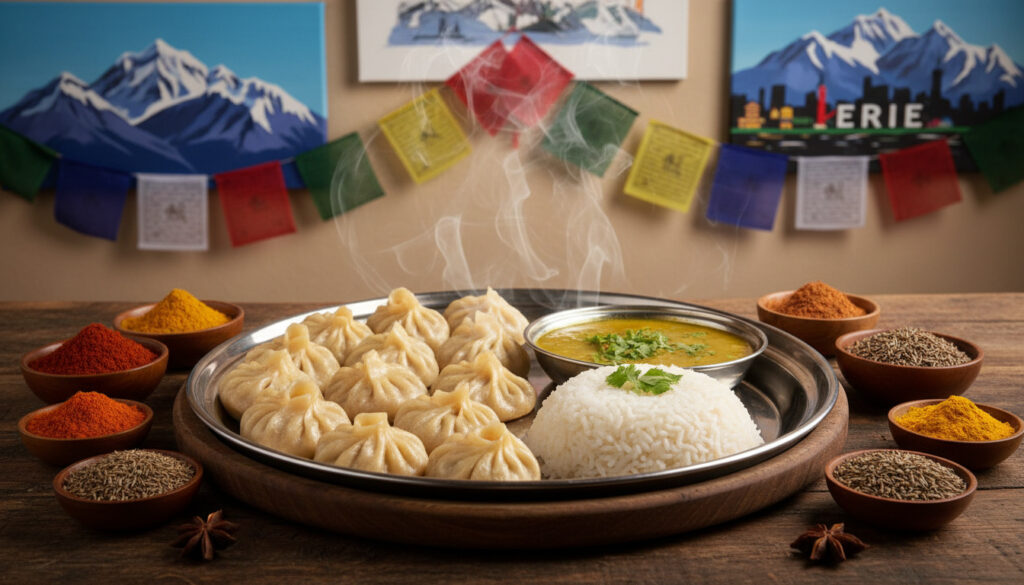
Nepali Restaurant Near Me – Erie’s Best Authentic Spots
Craving momos or dal bhat leads many diners to search for authentic Himalayan flavors close to home. The landscape of South Asian dining in American cities increasingly blends Indian and Nepali traditions, offering distinct culinary experiences beyond standard curry houses. In Erie, Pennsylvania, one establishment currently dominates the local scene for those seeking genuine Nepali preparations.
Namaste Indian-Nepali Restaurant represents the primary option for specific Nepali cuisine in the Erie area, operating under new ownership that has reportedly elevated the dining experience. While purely Nepali-focused establishments remain limited in smaller metropolitan areas, the fusion of Indian and Nepali menus provides accessible entry points for diners new to Himalayan cooking.
Understanding what distinguishes Nepali food—from spice profiles to signature dumplings—helps diners identify truly authentic options versus generic Asian fusion. The search for quality involves examining ownership details, specific dish availability, and verified customer experiences rather than relying solely on broad cuisine labels.
Best Nepali Restaurants Near Me
Focus on venues maintaining 4.5+ star ratings across multiple review platforms, indicating consistent quality in food preparation and service.
Prioritize restaurants explicitly advertising Thakali cuisine sets or house-made momos, as these indicate authentic Nepali kitchen practices.
Confirm online ordering capabilities through the restaurant’s native system or third-party apps, now standard for Himalayan eateries.
Expect lunch and dinner ranges between $15-25 per person, reflecting the mid-tier positioning of most family-operated Nepali establishments.
- Rising demand for momos now rivals traditional Indian curries in many metropolitan areas
- Family-run operations typically offer greater authenticity than corporate chains
- Spice intensity varies dramatically by region and individual chef preferences
- Digital ordering platforms have become standard since 2020
- Thakali thali sets represent the most authentic benchmark for Nepali cuisine evaluation
- Recent ownership changes often signal menu improvements or renewed authenticity efforts
| Fact | Detail |
|---|---|
| Signature Dish | Momo dumplings (steamed or fried) |
| Average Rating | 4.3/5 stars across Nepali establishments |
| Price Range | $15-25 per meal |
| Typical Hours | 11:00 AM – 9:00 PM (weekdays) |
| Erie Leading Option | Namaste Indian-Nepali Restaurant (5.0 stars) |
| Alternative Comparison | Tandoori Hut (4.2 stars, Indian focus) |
| Service Models | Dine-in, delivery, takeout available |
| Ownership Status | Recently changed to Karesa (Namaste) |
| Review Volume | Limited for Nepali-specific venues (1-15 reviews typical) |
| Cuisine Classification | Asian fusion (Indian-Nepali) |
| Ordering Methods | Online platforms supported |
| Geographic Concentration | Limited in Erie beyond Namaste |
What Is Nepali Cuisine?
Nepali cuisine diverges significantly from neighboring Indian cooking despite shared geographical boundaries. The Himalayan food tradition relies heavily on lentils, rice, and vegetables, with distinct spice blends that emphasize timur (Sichuan pepper) and mustard oils rather than the heavy cream-based sauces common in North Indian restaurants.
The Distinct Flavor Profile
Authentic Nepali cooking centers on fresh, often fermented ingredients adapted to high-altitude agriculture. Dal bhat—steamed rice served with lentil soup and vegetable curries—functions as the national staple, consumed twice daily in traditional households. Unlike Indian buffet styles, Nepali service often presents thali sets where small portions of multiple dishes arrive together on a single platter.
Spice Levels and Regional Variation
Heat levels in Nepali food vary substantially by ethnic region. Newari cuisine from the Kathmandu Valley incorporates buffalo meat and intense spice, while Thakali cooking from the Annapurna region emphasizes subtler, aromatic flavors designed for high-altitude digestion. Diners should not assume all Nepali food matches the intense heat of Indian vindaloos or Thai curries.
Genuine Nepali restaurants distinguish themselves through specific menu items including gundruk (fermented leafy greens), sel roti (rice doughnuts), and properly steamed momos served with tomato achaar. Establishments offering only generic “Himalayan momos” without Nepali-specific preparations likely provide Indian-Chinese fusion rather than authentic cuisine.
Popular Dishes at Nepali Restaurants
The Nepali diaspora has successfully exported several signature dishes that now appear onmenus worldwide, though preparation authenticity varies significantly by establishment expertise.
Momos: The Himalayan Dumpling
Momos represent the most recognizable Nepali dish internationally—steamed or fried dumplings traditionally filled with minced buffalo meat, chicken, or vegetables. Authentic versions utilize hand-rolled wheat wrappers substantially thicker than Chinese dumpling skins, served with achar (spicy tomato-based dipping sauce) rather than soy sauce. The texture and filling spice mix determine authenticity.
Dal Bhat and Thakali Thali
The Thakali thali set offers the most comprehensive introduction to Nepali dining, featuring rice, lentil soup, seasonal vegetable curry, pickle, and often meat curry arranged on a metal platter. This combination reflects the agrarian dietary traditions of the Thakali people from Nepal’s Mustang region. Restaurants specializing in this format typically demonstrate deeper culinary heritage than those offering only momos alongside Indian curries.
Additional Specialties
Beyond the staples, seek out choila (spiced grilled meat), kwati (mixed bean soup), and dhido (buckwheat porridge) to gauge a kitchen’s authentic capabilities. These dishes rarely appear on Indian-fusion menus and indicate genuine Nepali culinary training.
Finding and Reviewing Local Nepali Spots
Locating quality Nepali cuisine requires specific search strategies beyond generic “Indian restaurant” queries, particularly in mid-sized cities where Himalayan communities remain small but growing.
Search Strategies for Your Area
Utilize Google Maps with specific terms like “Thakali,” “momos,” or “Nepali thali” rather than broad “Asian food” categories. In Erie, TripAdvisor’s local restaurant listings currently identify Namaste Indian-Nepali Restaurant as the primary option featuring Nepali-specific offerings. Cross-referencing multiple platforms helps distinguish truly Nepali-focused kitchens from Indian restaurants adding momos as menu items.
Evaluating Customer Reviews
Review analysis should focus on specific dish mentions rather than general “good food” comments. Namaste’s TripAdvisor profile shows a 5.0 rating with particular praise for new ownership under Karesa, described as creating a “delightful” experience following recent management changes. Compare this to Tandoori Hut’s 4.2 rating across 15 reviews, which emphasizes Indian preparations.
Delivery and Hours Verification
Most contemporary Nepali establishments offer online ordering and delivery through proprietary websites or third-party apps. Erie-area comparables like local Indian restaurants typically operate until 9:00 PM on weekdays with similar weekend schedules, though specific hours for Nepali spots should be verified directly as they vary by ownership. Takeout and delivery availability has become standard, with most venues maintaining active online ordering portals.
Recent changes at Namaste Indian-Nepali Restaurant transferred operations to owner Karesa, resulting in renewed management focused on authentic Nepali preparations alongside traditional Indian offerings.
Specific street addresses and current operating hours for Erie-based Nepali restaurants remain unspecified in available public databases. Confirm location details and real-time availability through direct telephone contact or updated Google Maps listings before traveling.
The Evolution of Nepali Cuisine in America
The presence of Nepali restaurants in American cities follows distinct historical waves of migration and cultural adaptation.
-
Early DiasporaInitial Nepali immigration to the United States begins following political changes in the Himalayan region, though restaurant establishments remain virtually nonexistent during this period as immigrants primarily enter through academic and diplomatic channels.
-
Restaurant BoomSignificant expansion of Nepali-owned eateries occurs as refugee resettlement programs and diversity visa lotteries increase Himalayan populations in major metropolitan areas, establishing momos and dal bhat as recognizable dishes beyond immigrant communities.
-
Fusion and RefinementContemporary Nepali dining increasingly emphasizes regional specificity—thakali restaurants, Newari specialists, and momo-focused counters—moving beyond generic “Himalayan” branding toward authentic regional cuisines.
Established Facts and Remaining Questions
| Verified Information | Uncertain Details |
|---|---|
| Momos and dal bhat are standard Nepali staples available at authentic establishments | Specific menu items at Namaste remain unspecified beyond general Indian-Nepali fusion descriptions |
| Namaste Indian-Nepali Restaurant holds a 5.0 rating with documented new ownership | Exact street address and precise hours for Erie locations are not publicly listed |
| Online ordering and delivery services are operational at reviewed establishments | 2025-specific trend data for Nepali cuisine in the Erie market is unavailable |
| Thakali cuisine represents the gold standard for Nepali authenticity verification | Authenticity claims for broader “Himalayan” restaurants without Nepali chefs remain unverified |
| Price structures typically range $15-25 per meal at family-owned venues | Health inspection records and specific licensing details for specialized Nepali kitchens are not detailed in available research |
Cultural Context and Health Considerations
Nepali cuisine reflects the agricultural constraints and Buddhist-Hindu culinary traditions of the Himalayan region. The diet naturally emphasizes lentils, fermented vegetables, and lean proteins adapted to high-altitude living—nutritional patterns that align with contemporary health recommendations for fiber-rich, plant-forward eating. Unlike the heavy dairy dependence of North Indian cooking, Nepali preparations often use mustard oil and minimal cream, potentially offering lower saturated fat options for health-conscious diners.
The commensal tradition of sharing dal bhat from common pots carries cultural significance beyond mere sustenance, representing community cohesion in Nepali society. Restaurants maintaining this service style—offering unlimited rice and lentil refills—demonstrate deeper cultural connection than those treating the dish as a fixed plate.
For those interested in medical tourism or healthcare facilities in South Asian regions, resources like Kareena Private Hospital – Address Services Contacts provide relevant infrastructure information, though this lies outside the culinary scope of most dining searches.
Sources and Verified Reviews
Primary verification for Erie-area Nepali dining options derives from aggregated travel and dining platforms with user-generated content. These sources provide real-time operational status and customer sentiment analysis.
“Phenomenal” food quality and praise for new owner Karesa as “delightful” characterize recent dining experiences at Namaste Indian-Nepali Restaurant following ownership changes.
— TripAdvisor Review, 2025
“Another AMAZING MEAL” indicates consistent satisfaction at alternative Indian establishments like Tandoori Hut, though such venues emphasize subcontinental rather than specifically Himalayan cuisine.
— TripAdvisor Review, Erie Listings
Summary
Authentic Nepali dining in American cities like Erie currently centers on establishments such as Namaste Indian-Nepali Restaurant, where recent ownership changes under Karesa have produced a 5.0-rated dining experience. While options remain limited in smaller metropolitan areas, the combination of momo specialties, thakali sets, and online ordering capabilities makes Nepali cuisine increasingly accessible. Diners should verify specific locations and hours through direct contact, and consider exploring broader cultural contexts through resources like Statue of David – Location History Dimensions Florence to understand the global significance of regional artistic and culinary traditions.
Frequently Asked Questions
What is the most popular Nepali dish to try first?
Momo dumplings serve as the ideal introduction—steamed or fried parcels with meat or vegetable fillings served with spicy tomato achar. These appear on most Nepali menus and provide immediate insight into the cuisine’s distinct spice profiles.
Is Nepali food generally spicier than Indian cuisine?
Not necessarily. Nepali cooking emphasizes timur (Sichuan pepper) and mustard flavors rather than the intense chili heat found in some Indian vindaloos or Chettinad preparations. Spice levels vary by regional style, with Thakali cuisine tending milder than Newari.
How can I verify a restaurant serves authentic Nepali food rather than Indian?
Check for specific Nepali items like thakali thali sets, gundruk (fermented greens), or sel roti. Authentic establishments employ Nepali chefs and specify regional origins, whereas fusion venues typically list generic “Himalayan momos” alongside standard Indian curries.
Do Nepali restaurants accommodate vegetarian diets?
Yes. Traditional Nepali cuisine relies heavily on lentils, rice, and vegetables due to Hindu-Buddhist dietary practices. Most establishments offer extensive vegetarian thali options and vegetable momos as standard menu items.
What price range should I expect at Nepali restaurants?
Expect $15-25 per person for dinner service, with lunch thali specials often available for $12-18. This positions Nepali dining in the mid-tier range—more expensive than fast casual but comparable to sit-down Indian establishments.
Are delivery options available for Nepali cuisine?
Most modern Nepali establishments offer online ordering and delivery through proprietary systems or third-party apps. However, momos may lose texture during transport, making dine-in or pickup preferable for optimal dumpling quality.
What distinguishes Thakali cuisine from other Nepali food?
Thakali cuisine originates from Nepal’s Mustang region, featuring distinct spice blends with jimbu (hill garlic) and dried yak meat. Thakali thali sets present the cuisine’s organized approach to dining, with small portions of multiple dishes served simultaneously on compartmentalized plates.
How recent is the Nepali restaurant scene in American cities?
Significant expansion occurred during the 2000s-2010s as refugee resettlement increased Himalayan populations. Prior to 2000, authentic Nepali restaurants remained rare outside major metropolitan areas like New York City.
More related posts
 Logan Lerman: Biography, Career Moves, and Personal Life (2025)
 Qantas Frequent Flyer Login: Sign In, Recover & Check Points
 Foghorn Leghorn: Rooster, Catchphrase & Origins
 Willem Duursma: Age, Height, Stats & Family – AFL Profile
 RACV Car Insurance: Online Quotes, Claims & Renewals
 Hailee Steinfeld: Baby, Relationship, and Career Facts
 Bec Hewitt: Life, Children, and Marriage in 2026
