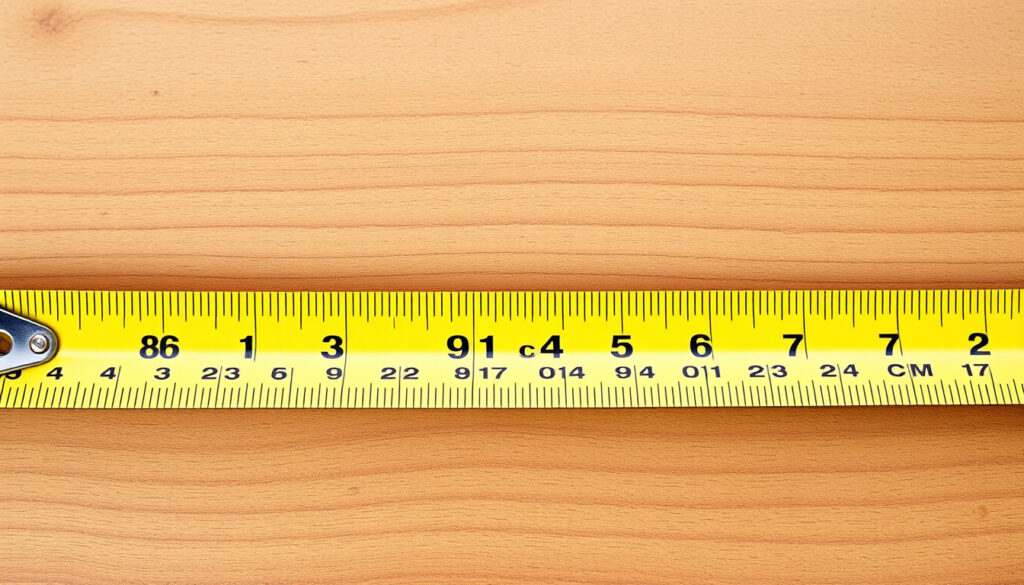
36 Inches to CM: Exact Conversion (91.44 cm) + Guide
If you’ve ever found yourself staring at a size tag in one system while mentally calculating another, you’re not alone. Converting 36 inches to centimeters is straightforward math—36 multiplied by 2.54 gives you 91.44 centimeters—but applying that number to real-world sizing tells a more complicated story. Whether you’re converting a waist measurement, comparing clothing sizes across regions, or checking if a 36-inch waist fits the health guidelines for your height, this guide walks through the numbers and what they actually mean.
36 inches equals: 91.44 cm · 1 inch equals: 2.54 cm · 36 inches in feet: 3 feet · Formula used: inches × 2.54
Quick snapshot
- 36 inches = 91.44 cm (Nourria Design)
- 1 inch = 2.54 cm by international standard (Size.ly)
- 3 feet = 36 inches (Nourria Design)
- Petite and tall variations for 36-inch measurements not standardized across brands
- No official ISO standard for clothing size correspondence to specific waist inches
- Surdyke men’s L starts at 36 inches (91–99 cm) (Surdyke)
- Enfield men’s L: 36–38 inches (92–96 cm) (Enfield Safety)
- US/UK sizes run larger due to vanity sizing (Wikipedia)
- EU numeric sizes (40–44) correspond to 33–38 inch waists (Enfield Safety)
These key measurements provide the foundation for understanding how 36 inches translates across different systems and contexts.
| Measurement | Value | Notes |
|---|---|---|
| Exact Conversion | 91.44 cm | 36 × 2.54 |
| Formula | inches × 2.54 | International standard |
| In Feet | 3 feet | 12 inches per foot |
| Waist Equivalence | 91.44 cm | Same value, different context |
| Surdyke Men L Waist | 36–39 inches | Starts at 36 in |
| Enfield Men L Waist | 36–38 inches | 92–96 cm range |
| US Women’s Size 10 Waist | 31 inches | 79 cm (Wikipedia) |
| US/UK Sizing Formula | s = bust − 28 | US standard (Wikipedia) |
What is 36 inches in centimeters?
The straightforward answer is 91.44 centimeters. This follows from the internationally recognized conversion factor of 2.54 centimeters per inch, established as the exact relationship between imperial and metric systems. Multiplying 36 by 2.54 yields 91.44 with no rounding involved.
Size converters like Size.ly use this formula as the foundation for all their international dress size charts, and the same 2.54 factor applies whether you’re converting a waist measurement, a piece of furniture dimension, or any other length.
Conversion formula
- To convert inches to cm: multiply by 2.54
- To convert cm to inches: divide by 2.54
- Example: 36 × 2.54 = 91.44 cm
- Reverse check: 91.44 ÷ 2.54 = 36.00
The 2.54 figure is not approximate—it is the exact definition established by the International Yard and Pound Agreement of 1959. Online converters and tape measures that display 91.44 cm for 36 inches are displaying a mathematically precise result, not a rounded estimate.
Quick calculator
For common values near 36 inches, the pattern is linear: each additional inch adds exactly 2.54 centimeters. A 34-inch waist converts to 86.36 cm, a 35-inch waist to 88.90 cm, and a 36-inch waist to 91.44 cm. If you work backward from a known centimeter value—like 90 cm—you can divide by 2.54 to find it corresponds to approximately 35.4 inches.
How to convert 36 inches into cm?
The conversion process requires just two pieces of information: the value you want to convert (36) and the conversion factor (2.54). This applies whether you’re working by hand, using a calculator, or checking an online tool.
Manual calculation steps
- Step 1: Write down the value in inches: 36
- Step 2: Multiply by 2.54: 36 × 2.54
- Step 3: Calculate: 30 × 2.54 = 76.2, then 6 × 2.54 = 15.24
- Step 4: Add the partial products: 76.2 + 15.24 = 91.44
- Step 5: Attach the centimeter unit: 91.44 cm
The same approach works for any inch value. If you need to convert 36 inches but want to verify using a different method, reverse the calculation by dividing 91.44 by 2.54—you should get back to 36.
Using online tools
Many online converters provide instant results. When using these tools, check whether the display shows 91.44 or a rounded figure like 91.4. For sizing applications, a rounded display may hide minor discrepancies that matter when you’re comparing across size charts that list measurements to the centimeter.
When measuring your own waist to compare against size charts, wrap a tape measure around the narrowest part of your torso, keeping it level and snug but not compressing the skin. Take the measurement over skin or thin clothing for the most accurate number, and measure at the end of a normal exhale. If you’re between sizes on a chart, measure twice and use the larger figure for a comfortable fit.
What is a 36 inch waist in centimeters?
A 36-inch waist translates to 91.44 centimeters, but what that number means in clothing depends heavily on which size system you’re looking at and whether you’re shopping for men’s or women’s garments. The same waist measurement can correspond to different labeled sizes across brands.
Waist measurement guide
In men’s sizing, 36 inches consistently maps to a large size across multiple brands. According to Surdyke’s size chart, men’s large starts at 36 inches and spans to 39 inches. Enfield Safety similarly lists men’s L at 36–38 inches. For men’s pants, a 36-inch waist typically lands in the L category.
Women’s sizing shows more variability. According to Nourria Design’s measurements, a 36-inch waist sits above their medium range—their women’s M (UK 12) corresponds to a 30-inch body measurement. Brands differ significantly, though: while Nourria puts 36 inches in the large range for garments, the Grivet Outdoors size chart shows women’s 1X (14W–16W) covering a 35–37 inch waist range.
Men vs women
The gender difference is significant. Men’s size charts show relatively consistent mapping: a 36-inch waist is unambiguously large across brands like Surdyke, Enfield, and most workwear or outdoor retailers. Women’s charts vary more because sizing formulas differ by region and because vanity sizing has expanded the relationship between actual measurements and labeled sizes over time.
The Wikipedia entry on clothing sizes notes that US women’s sizing uses the formula s = bust − 28, while UK sizing uses s = bust − 24. This means for the same body measurement, US and UK labels will differ—and neither directly corresponds to a specific waist inch number without additional context.
Vanity sizing means a garment labeled “large” today may fit a 36-inch waist, while decades ago that same size might have corresponded to a 33-inch waist. Wikipedia documents this shift, noting that US and UK clothing now runs larger than labeled measurements indicate. For accurate sizing, ignore the label and compare actual waist measurements.
Is a 36-inch waist big?
Whether a 36-inch waist is “big” depends on context: your height, gender, body composition, and which health guidelines you reference. The number alone doesn’t tell the full story. For adult men of average height (around 5’9″), a 36-inch waist is at the upper end of the normal range; for women of average height (around 5’4″), it exceeds the recommended maximum for health risk categories.
Size comparisons
Looking at general population averages helps ground the number. Wikipedia cites US women’s size 10 as having a 31-inch waist. Grivet Outdoors puts women’s large at 30.5–32 inches, with 1X (extended plus) reaching 35–37 inches. A 36-inch waist sits above the typical large range for most women’s brands.
For men’s average builds, Surdyke shows medium at 32–35 inches, so 36 inches marks the boundary into large. Enfield Safety lists men’s L at 36–38 inches. Compared to population averages, a 36-inch waist is moderate for men but relatively high for women.
Risk factors
Health guidelines often use waist circumference as a risk indicator. General recommendations for adults suggest keeping waist circumference below 40 inches for men and below 35 inches for women to reduce health risks associated with abdominal fat. A 36-inch waist exceeds the female guideline but stays below the male threshold.
These numbers are population-level guidelines, not individualized medical assessments. A person with a muscular build or different height may have a 36-inch waist without health concerns. Conversely, someone with a narrow frame might carry health risks at smaller measurements. Waist-to-height ratio provides additional context beyond the raw measurement number.
Waist circumference is one factor among many for assessing health. The specific risks associated with a 36-inch waist vary based on individual factors including height, activity level, and family health history. Consult health guidelines or a healthcare provider for personalized interpretation.
What is EU size 36 in inches?
EU size 36 does not correspond directly to a 36-inch waist—the numbering systems operate on different scales. EU numeric sizes are not measurements in inches or centimeters; they are label sizes that vary by garment type, gender, and country. Understanding the mapping requires looking at specific conversion charts rather than assuming a direct equivalent.
Shoe size conversions
For shoes, EU size 36 typically corresponds to approximately 9.25 inches (about 23.5 cm) in foot length. This is the length of the foot, not a body measurement like waist. Shoe size conversions differ fundamentally from clothing size conversions because they measure the foot itself rather than a circumferencial body part.
EU shoe size 36 in women’s shoes converts to roughly US size 6 or UK size 3.5. The relationship between EU clothing size 36 and waist measurements is different from shoe sizing—EU 36 in clothing is a label that corresponds to different body measurements depending on whether it’s a dress, pant, or top.
Clothing equivalents
For women’s clothing, EU size 36 roughly corresponds to US size 6–8 or UK size 8–10. Size.ly’s international chart shows US size 8 as equivalent to UK 12, EU 40, with a waist of 28–30 inches. There’s no direct 36-inch waist equivalent in this mapping.
EU men’s sizes in the 46–48 range correspond roughly to a 36-inch waist in many brands, but the exact mapping varies. Enfield Safety’s sizing chart provides specific EU-to-inch mappings: men’s L (36–38 inches) aligns with EU sizes that vary by region, with DE 52–54 corresponding to 33–34 inches. The EU sizing system uses different reference points for different body measurements.
EU clothing sizes are not direct measurements—they are labels that require conversion charts specific to each garment type and region. A 36-inch waist does not correspond to EU size 36 in any standard sizing system. Always check the specific brand’s size chart that includes actual waist measurements, not just size labels.
Steps: How to Measure Your Waist in Inches and Convert to CM
Accurate waist measurement requires proper technique, and converting that measurement to centimeters requires understanding the formula. These steps apply whether you’re measuring for clothing purchases, health assessment, or any other purpose that requires precision.
- Step 1: Gather the right tools. You need a flexible measuring tape (the kind tailors use), and you should measure without bulky clothing that adds bulk to the reading.
- Step 2: Find your natural waist. Your natural waist is the narrowest part of your torso, typically located between your ribcage and belly button. Stand relaxed and find this point by feeling for the indentation when you bend slightly to the side.
- Step 3: Position the tape correctly. Wrap the measuring tape around your waist at the narrowest point. Keep the tape level (parallel to the floor) on all sides. Hold it snug but not tight—you should be able to slip one finger between the tape and your skin.
- Step 4: Take the measurement. Look straight ahead while the tape is in position. Breathe normally and measure at the end of a normal exhale. Read the number where the tape meets, capturing the measurement in inches.
- Step 5: Record and convert. Note your measurement in inches. To convert to centimeters, multiply by 2.54. If you measured 36 inches, your result is 36 × 2.54 = 91.44 cm.
- Step 6: Verify against size charts. Compare your measurement to the specific brand’s size chart. Remember that vanity sizing means labeled sizes may not match actual measurements—always use the numeric waist measurement rather than the label.
According to PackLove’s sizing guide, measuring at the narrowest point over skin or thin clothing provides the most accurate result. Inseam measurement is also crucial alongside waist for pants fit—measure from your crotch to the desired pant leg opening length for complete sizing data.
Regional Size Variations: US, UK, EU, and Asia
Size labeling varies significantly across regions, and a 36-inch waist means different things depending on which country’s sizing system you’re using. Regional standards have evolved differently, making cross-border shopping more complex than simply converting numbers.
In the US and UK, sizing has shifted over time due to vanity sizing—garments labeled with the same size now fit larger body measurements than they did decades ago. According to Wikipedia, the US women’s formula (s = bust − 28) and UK formula (s = bust − 24) create systematic differences even for identical body measurements.
EU sizing (common in Germany, France, and other European countries) uses a different numeric system and is often closer to actual measurements in centimeters. Enfield Safety’s chart shows men’s L (36–38 inches) corresponding to different EU numbers depending on the specific country’s sizing tradition.
Brazilian sizes reportedly run smaller than international standards for waist measurements, according to Wunderlabel’s size chart blog. Asian sizes, particularly Japan and Russia, also vary and often run smaller than their labeled measurements suggest. Future Fusion notes that checking specific charts is essential for Asia-region purchases.
Brand variations compound regional differences. Size chart resources like Size.ly note that “sizes can vary significantly between brands.” A 36-inch waist might be medium in one brand, large in another, and not even listed in a third that uses vanity sizing aggressively.
Upsides
- The conversion formula (× 2.54) is exact and universal
- 36 inches in cm = 91.44 cm with no rounding
- Men’s sizing for 36-inch waist is fairly consistent across brands (large)
- Multiple verified sources confirm the conversion accuracy
Downsides
- Vanity sizing makes labeled sizes unreliable
- Women’s sizing varies more than men’s across regions
- EU size 36 is unrelated to a 36-inch waist
- Brand-specific charts vary significantly
“Women’s sizes are unfortunately even more of a minefield.”
— Wunderlabel Blog, International Size Charts
“Sizes can vary significantly between brands, so it’s essential to check the specific brand’s size chart.”
— Size.ly, International Dress Size Conversion Chart
Related reading: 5’5 in cm · Ounce to mL
Related coverage: 30 inches in cm fördjupar bilden av 30 Inches in CM – Exact Conversion and Key Uses.
Frequently asked questions
What is 34 inches in cm?
34 inches equals 86.36 cm (34 × 2.54). This follows the same conversion formula used for 36 inches. A 34-inch waist falls below the 36-inch measurement and is typically medium in most men’s sizing charts.
How many feet is 36 inches?
36 inches equals exactly 3 feet, since there are 12 inches in one foot. 36 ÷ 12 = 3. This is a clean whole number conversion that may help visualize the length in everyday terms.
What size pants is a 36 inch waist?
In men’s sizing, a 36-inch waist is typically a large across most brands. Surdyke lists men’s L at 36–39 inches, and Enfield Safety lists men’s L at 36–38 inches. For women’s sizing, a 36-inch waist is larger than most women’s large sizes and may correspond to plus sizes in some brands. Always check the specific brand’s size chart for exact correspondence.
Is 36 inches a large height for a child?
36 inches (3 feet) is approximately the height of a 3 to 4 year old child according to standard growth charts. For a school-age child, 36 inches would be below average. This context depends heavily on age, gender, and individual growth patterns. Consult pediatric growth charts for age-appropriate height expectations.
What is the average waist size?
Average waist size varies by country, gender, and age. For US adults, average waist circumference is approximately 38–40 inches for men and 35–37 inches for women according to population health surveys. Wikipedia notes US women’s size 10 corresponds to a 31-inch waist, suggesting the average spans a range above and below that figure.
How accurate are online converters?
Most online converters apply the correct formula (× 2.54) and display accurate results. However, some show rounded figures rather than the exact 91.44 for 36 inches. For sizing applications where precision matters, verify the converter displays the full decimal places. The formula is mathematically exact by international definition, so any variation in display is a rounding choice, not a conversion error.
More related posts
 Free Credit Score Check Ireland: Guide to Score Improvement
 Hillarys Beach Club: Menus, Prices & Perth Reviews
 Good Guys Osborne Park: Hours, Services, Products & Reviews
 Arthur Fils Injury: Why He Withdrew from French Open
 Bookshelf Guide: Buy vs Build, Costs, Feng Shui & Irish Shops
 Josh Duhamel Facts: Age, Wife, Net Worth, and Career
 Black Blazer Guide: Best Men’s & Women’s Blazers for 2025
 Luke Bryan: Health, Tragedy, Family & Career Facts
