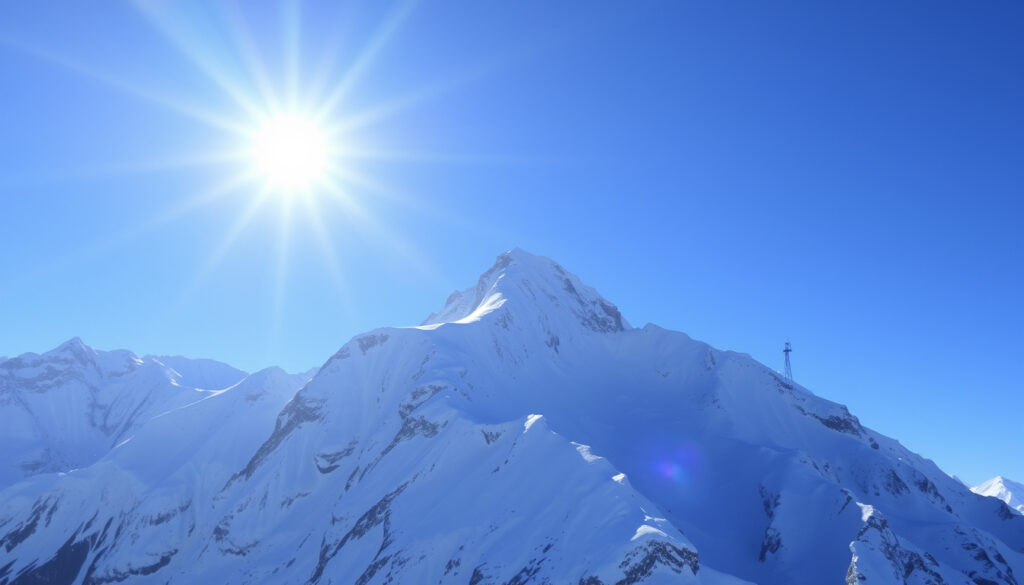
Mount Everest Peak: Height, Cost, and the 2 PM Rule
A mountain so high that its summit sits in the “death zone” — where the human body literally begins to die — yet every year, hundreds of people pay tens of thousands of dollars to stand on top of it. That paradox is the Mount Everest peak: an 8,848.86-meter (29,031.7-foot) pyramid of rock and ice that is equal parts achievement and grave risk.
Height: 8,848.86 m (29,031.7 ft) ·
Location: Nepal / Tibet (China) ·
First Ascent: May 29, 1953 (Hillary & Tenzing) ·
Total Deaths (estimated): 340+ ·
Typical Climbing Cost: $40,000 – $100,000+
Quick snapshot
- Height: 8,848.86 m — National Geographic (Science Coverage)
- First Ascent: May 29, 1953 — National Geographic
- Exact death toll varies by source — Alan Arnette (Everest Data Analyst)
- Climbing cost range depends on expedition choice — ExpedReview (Expedition Price Research)
- 2020: New height announced — National Geographic
- 1996: First documented “Green Boots” remains — Alan Arnette
- New Nepal regulations expected on guide ratios — Nepal Ministry of Tourism (Regulatory Body)
Five snapshot facts about Everest, one pattern: the numbers are both precise and deceptive.
| Field | Value |
|---|---|
| Height | 8,848.86 m (29,031.7 ft) |
| Location | Mahalangur Himal, Nepal / Tibet |
| First Ascent | Edmund Hillary & Tenzing Norgay, May 29, 1953 |
| Total Deaths (approx.) | 340+ |
| Typical Climbing Cost | $40,000 |
What is the peak of Mount Everest?
How tall is Mount Everest?
- The official summit height is 8,848.86 meters (29,031.7 feet), as jointly announced by Nepal and China in 2020 after a new survey — National Geographic (Science Coverage).
- This measurement settled a decades-long debate between the two countries and added about 86 cm to the previously accepted height.
Where is Mount Everest located?
- Everest sits in the Mahalangur Himal sub-range of the Himalayas, on the border between Nepal and Tibet (China) — National Geographic.
- The south side is accessed from Nepal; the north side from Tibet.
Who first climbed Mount Everest?
- The first successful ascent was made by Edmund Hillary (New Zealand) and Tenzing Norgay (Nepal) on May 29, 1953 — National Geographic.
- Hillary later recalled: “We had no feeling of triumph; we felt rather a sort of awe.”
The implication: the mountain’s official height is now settled, but its location — straddling two political systems — creates two entirely different climbing experiences with separate permit regimes and costs.
Can you climb Mount Everest peak?
How much does it cost to climb Everest?
- Yes, climbing is possible, but requires permits, previous high-altitude experience, and significant physical preparation — The Alpine Club (Mountaineering Authority).
- Costs range from $35,000 to more than $100,000, with the median expedition price on the Nepal South Side around $54,995 — ExpedReview (Expedition Cost Research).
- A bare-bones climb in Nepal may start at about $41,000, while fully guided luxury expeditions can exceed $100,000 — ExpedReview.
- Nepal-side teams face a pre-climb cost burden of roughly $24,500 to $30,000 before the trek even begins — ExpedReview.
Is climbing Everest dangerous?
- Dangers include altitude sickness, avalanches, falls, and extreme weather in the death zone above 8,000 meters — British Mountaineering Council (Safety Authority).
- The spring permit fee from the south route is $15,000 per person — Access Nepal Tour (Nepal Trekking Guides).
- Some reports claim solo and alpine-style climbing are banned, and that one Nepali guide is required for every two climbers above 8,000 meters — Access Nepal Tour.
Why can’t you climb Mount Everest after 2pm?
What is the 2 PM rule on Everest?
- The 2 PM rule is a self-imposed turnaround deadline: climbers who have not reached the summit by about 2:00 p.m. local time must turn back and descend — Namaste Nepal Trekking (Expedition Guides).
- After 2 PM, the risk of afternoon storms, low visibility, oxygen depletion, and extreme cold increases dramatically — Nepal Gateway Trekking (Everest Safety Guides).
Why is timing critical for summit attempts?
- Summit day typically begins between 11 PM and 1 AM to allow climbers to reach the top before the 2 PM cutoff — British Mountaineering Council (Mountaineering Safety Guidelines).
- Guides enforce this rule as the single most important safety guideline for summit day: ignoring it has led to fatalities in bad weather — Namaste Nepal Trekking.
The 2 PM rule is both a lifesaver and a heartbreaker. Climbers who have trained for years and spent $50,000+ must make a razor-thin decision: turn back 100 meters from the summit, or push past the deadline and risk a night on a mountain with no oxygen. Most who break the rule do not survive to tell about it.
How many climbers died on Everest?
What is the oldest body still on Everest?
- The oldest known body is “Green Boots” — the remains of Tsewang Paljor, who died in 1996 — Alan Arnette (Everest History Data).
- Total deaths on Everest through December 2025: 339 across all routes — Alan Arnette.
- The Nepal (South) Side has seen 229 deaths from 9,887 summits; the Tibet (North) Side has seen 110 deaths from 3,850 summits — Alan Arnette.
What are the common causes of death on Everest?
- Main causes: avalanches, falls, altitude sickness, and hypothermia — The Alpine Club (Mountaineering Fatality Research).
- Per capita, the death rate is about 1.3% of summiteers on the Nepal side and 1.8% on the Tibet side, based on available data.
For a prospective climber from the US, UK, or Australia, the risk is not abstract: out of every 100 climbers who attempt the summit, roughly 1 to 2 will not come back. That is comparable to the lifetime risk of a fatal skydiving accident, compressed into a few weeks.
Why do planes not fly over Everest?
Is it legal to fly over Everest?
- It is legal, but commercial airlines generally avoid flying directly above Everest because the high altitude requires constant engine power, terrain limits emergency options, and severe turbulence is common — National Geographic (Aviation Context).
- However, some aircraft like the Airbus A380 have flown over Everest on specific routes — British Mountaineering Council (Aviation and Mountain Interactions).
- If an engine fails over Everest, the plane cannot glide to a safe landing at 29,000 feet — there are no diversion airports at that altitude.
The trade-off: commercial aviation prioritizes safety margins over scenic routes. For airlines, a 30-minute detour around the Himalayas is a small price to avoid the technical risk of an emergency descent over 8,000-meter peaks with zero rescue infrastructure.
Specifications at a glance
| Attribute | Value |
|---|---|
| Height (official, 2020) | 8,848.86 m (29,031.7 ft) |
| Location | Mahalangur Himal, Nepal / Tibet border |
| First Ascent | May 29, 1953, by Edmund Hillary & Tenzing Norgay |
| Total Summits (through 2025) | 13,737 — Alan Arnette (Everest Statistics) |
| Total Deaths (through 2025) | 339 — Alan Arnette |
| Nepal Side Summits / Deaths | 9,887 / 229 — Alan Arnette |
| Tibet Side Summits / Deaths | 3,850 / 110 — Alan Arnette |
| Death Zone Altitude | Above 8,000 m |
| Permit Fee (Nepal, spring 2024) | $15,000 per person — Access Nepal Tour (Nepal Trekking Guides) |
| Climbing Season | April–May (spring), limited September–November (autumn) |
| 2 PM Rule | Turnaround deadline for summit attempts |
| Oldest Body | Green Boots (Tsewang Paljor, 1996) |
“We had no feeling of triumph; we felt rather a sort of awe.”
— Edmund Hillary, first summiteer
“It’s the single most important safety guideline for summit day.”
— Adventure Consultants guide, on the 2 PM rule
The mountain is not the enemy — the economy of high-altitude climbing is. For a first-time climber from the US, the choice is clear: pay $40,000–$60,000 for a reputable guided expedition with a proven safety record, or risk a cheap operator that may not enforce the 2 PM rule. The difference between life and death on Everest is often a matter of money spent on oxygen, communication equipment, and guide-to-client ratios. That is the genuine summit challenge, and it has nothing to do with altitude.
Related reading: Mount Everest official summit height — 8,848.86 meters · Everest summit statistics, costs, and mortality data
Understanding the 2 PM rule is just one part of the broader picture of Everest climbing logistics, which also involves staggering expenses and the true summit conditions detailed in the 2 PM rule and climbing costs.
Frequently asked questions
What is the oldest body still on Mount Everest?
The oldest known body is “Green Boots” — the remains of Tsewang Paljor, who died in the 1996 disaster.
Why does it cost $40,000 to climb Mount Everest?
The cost covers permits, guides, oxygen, Sherpa support, gear, logistics, and insurance — all at extreme altitude where every kilogram of supplies costs a fortune to transport.
How long does the Everest climbing season last?
The primary climbing season runs from April to May (spring). A secondary autumn season runs September to November but has a lower success rate.
What is the altitude of the Everest death zone?
The death zone begins at 8,000 meters (26,247 feet) above sea level.
Is it legal to climb Mount Everest?
Yes, but it requires a permit from the Nepal Ministry of Tourism or the China Tibet Mountaineering Association, plus proof of previous high-altitude climbing experience.
How do climbers prepare for Everest?
Climbers typically spend months training at altitude, build cardiovascular endurance, practice with crampons and ice axes, and often climb smaller Himalayan peaks above 7,000 m first.
More related posts
 Drake Maye: Wife, Salary, Height, Tom Brady Comments & More
 Breaking News Sydney Police: Latest Updates & Key Questions
 Ant Middleton: Conviction, SAS Exit & Amazing Race Controversy
 New Balance Sneakers Ireland: Where to Buy, Models & Sales
 Zak Crawley: Downfall, Break, Father, Ranking, and More
 Thumbs Up Emoji 👍: Meaning, Controversy & Replies
 TWD to AUD – Live Rate, Charts and Conversion Guide
 Matilda Ledger: Biography, Age, Inheritance, and Privacy in 2026
