Cathy Freeman: Medical Condition, Asthma, and The Bodysuit Explained
Few Olympic moments are as etched in memory as Cathy Freeman’s gold medal run at the Sydney 2000 Games—but behind that iconic race was a woman quietly managing a condition that many athletes face: asthma. Her journey from a young Aboriginal girl in Queensland to lighting the Olympic cauldron is a story of resilience, identity, and unanswered health questions.
Full name: Catherine Astrid Salome Freeman ·
Born: 16 February 1973, Mackay, Queensland, Australia ·
Olympic medals: 2 (1 gold, 1 silver) ·
World Championship golds: 2 ·
Personal best (400 m): 48.63 seconds ·
Known for: Lighting the Olympic cauldron at Sydney 2000, winning gold in 400 m
Quick snapshot
- Freeman has been diagnosed with asthma (Asthma Australia)
- She won Olympic gold in the 400m at the 2000 Sydney Games (National Museum of Australia)
- She is an Aboriginal Australian (National Museum of Australia)
- Whether Freeman has a neurological condition beyond asthma is unconfirmed and not part of her public medical record.
- The exact reasons for her running style have not been formally attributed to any undiagnosed condition.
Six key facts at a glance, one pattern: Freeman’s biography blends elite athletic achievement with a health narrative that remained hidden for much of her career.
| Fact | Detail |
|---|---|
| Date of Birth | 16 February 1973 |
| Place of Birth | Mackay, Queensland, Australia |
| Major Win | 400m Gold at 2000 Sydney Olympics |
| Indigenous Heritage | Aboriginal Australian (Kuku Yalanji, Birri Gubba) |
| Known Medical Condition | Asthma |
| Spouse | Sandy Bodecker (m. 1999; div. 2003) |
What medical condition does Cathy Freeman have?
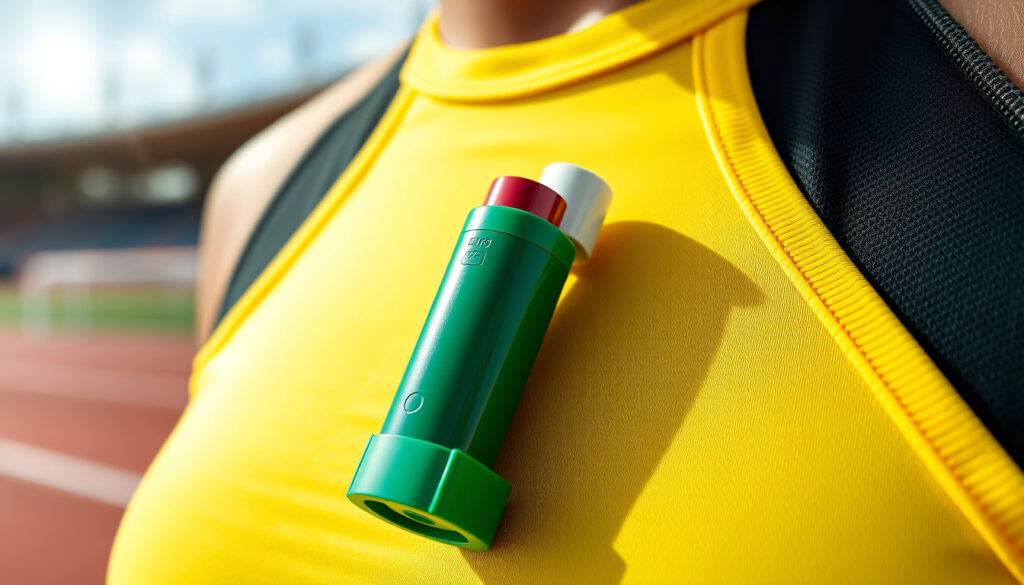
Asthma diagnosis and management
Cathy Freeman has spoken openly about living with asthma. According to Asthma Australia (national asthma charity), she experienced shortness of breath, chest tightness, and wheeziness after workouts—symptoms that were subtle enough that she did not initially recognize them as asthma. Her diagnosis did not come until 2003, after she had retired from professional athletics and returned to Melbourne. SBS News (Australian media) reported that Freeman’s symptoms had gone undiagnosed for decades.
An Olympic champion can perform at the highest level while managing an undiagnosed respiratory condition—highlighting how easily asthma can be mistaken for normal exertion, especially in elite female athletes.
Speculation about other neurological conditions
Some observers have speculated about a possible neurological condition behind Freeman’s distinctive running style, often citing the documentary Running Without a Diagnosis. However, Freeman has not received any formal diagnosis for a neurological condition. The exact nature of any such condition remains unconfirmed and is not part of her public medical record. Wikipedia (community encyclopedia) notes only her asthma diagnosis.
The implication: The gap between public curiosity and medical records is wide—what remains unclear is far more than what is medically confirmed.
Why did Cathy Freeman wear a bodysuit?
The aerodynamic full-body suit
At the Sydney 2000 Olympics, Freeman wore a full-length compression bodysuit during her 400m races. According to Wikipedia (community encyclopedia), the suit was primarily designed for aerodynamic performance—reducing drag and improving airflow.
Cultural and personal reasons
The suit also carried deep cultural significance. Freeman, an Aboriginal Australian, wore green and gold—the colors of the Australian flag—and the suit’s design incorporated patterns that reflected her heritage. The National Museum of Australia (government institution) notes that her victory lap carrying both the Aboriginal and Australian flags made the bodysuit an enduring symbol of national unity.
What this means: The bodysuit was not a mere performance tool—it was a deliberate statement of identity, merging sport with cultural representation.
Why is Cathy Freeman so important?
Symbol of reconciliation
Freeman is one of the most recognizable Aboriginal Australian athletes in history. The National Museum of Australia (government institution) identifies her as a First Nations athlete whose achievements transcend sport. Her decision to carry both the Aboriginal flag and the Australian flag during victory laps—first at the 1994 Commonwealth Games and then at the 2000 Olympics—was a powerful act of reconciliation.
Olympic achievements
On 15 September 2000, Freeman lit the Olympic cauldron at the Sydney Games opening ceremony (National Museum of Australia). Ten days later she won gold in the women’s 400m, finishing in 49.11 seconds. Wikipedia (community encyclopedia) records her Olympic silver medal from 1996 and two World Championship golds (1997, 1999).
The pattern: Freeman’s importance is not just about gold medals—it is about what she represented for Australia’s reconciliation journey at a moment when the nation was ready to see itself differently.
What racism did Cathy Freeman face?
Early life experiences
Growing up in Mackay, Queensland, Freeman experienced racism as an Aboriginal child in Australia. Wikipedia (community encyclopedia) documents that she was subjected to racial abuse from a young age, an experience that shaped her later advocacy.
Public and media scrutiny
As a public figure, Freeman faced criticism for her political statements, particularly her decision to carry the Aboriginal flag. The National Museum of Australia (government institution) notes that her flag-bearing was both celebrated and contested, reflecting the divided public opinion of the time.
The racism Freeman endured is a reminder that even the nation’s most celebrated athletes face systemic bias—and that sporting triumphs do not erase social inequality.
Did Cathy Freeman ever marry and have a baby?
Marriage to Sandy Bodecker
Freeman married Sandy Bodecker, an American Nike executive, in 1999. According to Wikipedia (community encyclopedia), the couple divorced in 2003. She has not remarried.
Motherhood
Freeman has a daughter, Ruby, born in 2011. Her role as a mother has been kept relatively private, but she has spoken about balancing family life with her foundation work.
The trade-off: Freeman’s personal life has largely remained out of the spotlight, but the public curiosity about her health and relationships persists—a tension faced by many retired athletes.
Timeline
- 1973: Born in Mackay, Queensland.
- 1990: First Aboriginal Australian to win gold at Commonwealth Games (relay).
- 1994: Won gold in 400m at Commonwealth Games; carried Aboriginal flag on victory lap.
- 1997: Won first World Championship gold in 400m.
- 2000: Lit Olympic cauldron at Sydney 2000; won gold in 400m.
- 2003: Retired from professional athletics.
(Sources: National Museum of Australia, Wikipedia)
Clarity check
Confirmed facts
- Cathy Freeman has been diagnosed with asthma.
- She won Olympic gold in the 400m at the 2000 Sydney Olympics.
- She is an Aboriginal Australian.
Rumor / unclear
- The exact nature of any neurological condition beyond asthma is unconfirmed.
- Whether Freeman’s running style was influenced by an undiagnosed condition remains speculative.
“I had shortness of breath, chest tightness, and wheeziness after workouts.”
Cathy Freeman, speaking to Asthma Australia
“Freeman achieved her greatest goal at Sydney 2000 by winning the women’s 400m gold medal.”
National Museum of Australia
For Australian fans and health researchers, the takeaway is clear: Freeman’s story is one of high performance under the radar of a treatable condition. The medical questions that linger are a reminder that elite athletes are not immune from under-diagnosis, and that public fascination often outpaces available evidence.
Frequently asked questions
Did Cathy Freeman set a world record?
Freeman’s personal best of 48.63 seconds in the 400m is the sixth-fastest time ever run by an Australian woman, but she never held the world record. The current world record (47.60 seconds) is held by Marita Koch.
Why did Cathy Freeman cover her mouth with the flag?
After winning gold at the 1994 Commonwealth Games, she covered her mouth with the Aboriginal flag during her victory lap—a gesture widely interpreted as a silent protest against racism and a demand for Indigenous recognition.
When did Cathy Freeman retire?
Freeman retired from professional athletics in 2003, shortly after her asthma diagnosis was confirmed. She cited a desire to step away from the demands of elite sport.
Is Cathy Freeman still involved in athletics?
She is not actively competing but remains a public figure through the Cathy Freeman Foundation, which focuses on education for Indigenous children, and occasional ambassadorial roles.
How fast was Cathy Freeman’s 400m time?
Her winning time at the 2000 Sydney Olympics was 49.11 seconds. Her personal best is 48.63 seconds, set in 1996.
What did Cathy Freeman do after the Olympics?
After retiring, she focused on family, founded the Cathy Freeman Foundation in 2007, and became an advocate for asthma awareness. She also published an autobiography.
What is Cathy Freeman’s foundation?
The Cathy Freeman Foundation supports educational opportunities for Aboriginal and Torres Strait Islander children, aiming to close the gap in school attendance and achievement.
More related posts
 Sam Harper: Biography, BBL Career, and Personal Life
 Parklea Sand and Soil – Sydney Landscaping Materials Guide
 Stana Katic: Castle Feud, Departure, Ethnicity & 2026 Updates
 Qantas Frequent Flyer Login: Sign In, Recover & Check Points
 Joan Crawford: Biography, Bette Davis Feud and Death
 When Is Daylight Savings – 2024 & 2025 Dates and Rules
 Logan Lerman: Biography, Career Moves, and Personal Life (2025)
 Willem Duursma: Age, Height, Stats & Family – AFL Profile
