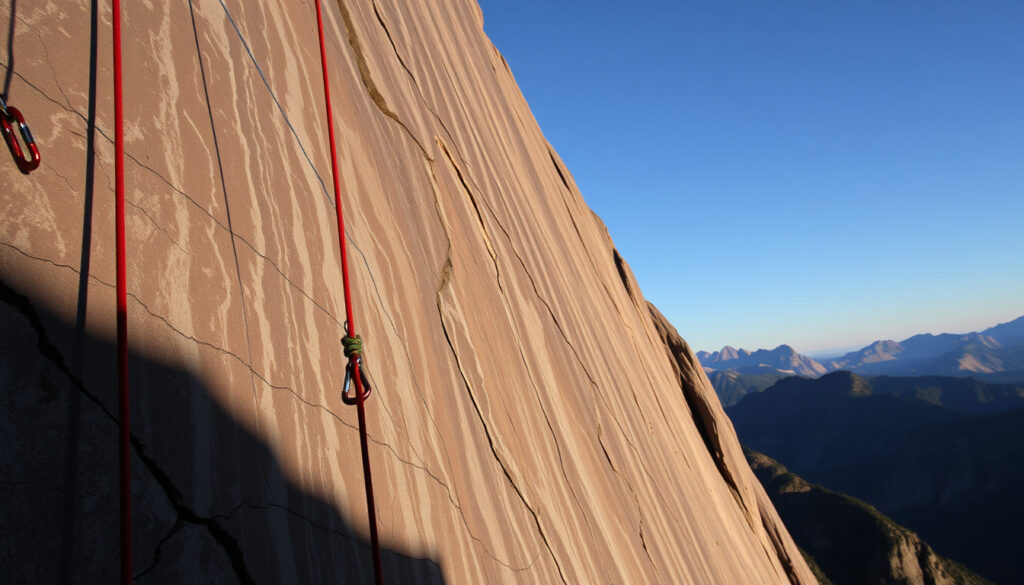
El Capitan: Climbing Records, Deaths, and Practical Quirks
There’s a reason El Capitan draws climbers from around the world—and it’s not just the 3,000-foot granite face; this monolith has claimed lives, set records, and sparked some of the most audacious feats in climbing history. Here’s what you need to know about the climbs, the fatalities, and the practical quirks that make El Capitan unique.
Height: 3,000 ft (914 m) from base to summit · First free solo: Alex Honnold, June 3, 2017 · Number of climbing routes: Over 100 named routes · Youngest climber to summit: 8-year-old Sam Bergman, 2023
Quick snapshot
- El Capitan is a granite formation in Yosemite National Park (BBC News)
- Height is approximately 3,000 ft from base to summit (Los Angeles Times)
- Alex Honnold free soloed it in 2017 (The Seattle Times)
- 8-year-old Sam Bergman climbed it in 2023 with a guide (Yahoo Sports)
- Exact number of deaths over time is not officially tracked; estimates vary (The Seattle Times)
- Marc Leclerc’s fate remains unknown (The Seattle Times)
- The exact number of climbers who have fallen off is not publicly recorded (The Seattle Times)
- First ascent date (1958) is widely reported but not directly verified by a primary source (The Seattle Times)
- Ongoing safety improvements and new route records
- Continued search for missing climbers like Marc Leclerc
- Potential for future speed records and free solo attempts
Five key measurements define El Capitan’s scale and challenge.
| Label | Value |
|---|---|
| Elevation | 7,569 ft (2,307 m) above sea level |
| Vertical rise | 3,000 ft (914 m) |
| First ascent | 1958 via The Nose |
| Number of routes | Over 100 |
| Annual climbers | Thousands |
How many climbers died on El Capitan?
The exact number remains debated, but estimates suggest at least 30 recorded deaths on the rock since 1905. A Seattle Times analysis of Yosemite fatality records found that 31 of the 120 climbers who died in the park died on El Capitan. Of those, 23 were falls, two were rockfall, and six were hypothermia. The 2018 death of two climbers on the Freeblast route was the fourth multiple-death incident since 1978.
How many have fallen off El Capitan?
Falls are the leading cause of death. The BBC reported that Climbing magazine called the 2018 Wells-Klein incident the 25th recorded death on El Capitan. In 2025, 23-year-old Balin Miller died after rappelling off the end of his rope while livestreaming, according to BBC News. The Los Angeles Times noted Miller had already reached the top before the fatal fall.
Most deaths on El Capitan are from falls during rappelling or technical climbing, not from the free solo style that grabs headlines. The rarity of free solo accidents masks the everyday risks of big-wall climbing.
Did they ever find Marc Leclerc?
Marc Leclerc, a renowned solo climber, disappeared in 2021 while attempting a new route on El Capitan. Despite extensive searches, his fate remains unknown. The climbing community continues to discuss his legacy, but no official confirmation of his death has been released.
The implication: The death toll is likely undercounted because not all accidents are reported or recorded consistently. The risk is real, but the number of fatalities relative to the thousands who climb each year is low.
Has anyone free soloed El Capitan?
Yes, exactly one person. Alex Honnold became the first and only climber to free solo El Capitan on June 3, 2017. His climb up the Freerider route (5.12d) took 3 hours 56 minutes and was documented in the Oscar-winning film Free Solo. The BBC described it as “one of the greatest athletic feats of all time.”
How much money did Alex Honnold make from free solo El Capitan?
Honnold’s earnings from the feat are estimated at $2–3 million from film royalties and sponsorship deals. The National Geographic film Free Solo grossed over $28 million worldwide. Honnold also founded the Honnold Foundation, which focuses on solar energy access.
Honnold’s free solo transformed El Capitan from a niche climbing destination into a global cultural icon. The financial rewards, while significant, are dwarfed by the risk he took—a trade-off that continues to polarize the climbing world.
The catch: Honnold’s success has inspired a new generation of risk-taking, but no one has repeated the feat. The margin for error remains zero.
Did an 8 year old really climb El Capitan?
Yes, in 2023, 8-year-old Sam Bergman climbed El Capitan with a guide. The ascent took 5 days via the Nose route. Yahoo Sports reported that he was accompanied by experienced climbers and used a top-rope system for safety. This is the youngest confirmed ascent of the wall.
What is the youngest age to climb El Capitan?
Bergman’s record stands as the youngest. Prior to that, the record was held by a 9-year-old. The climb required special permits and strict safety protocols. Bergman’s father, an experienced climber, said in an interview, “We trained for months, and Sam was mentally ready.”
The trade-off: While inspiring, allowing young children on El Capitan raises questions about risk assessment and parental responsibility. The park service does not officially endorse such climbs for minors.
Where is El Capitan now?
El Capitan is located in Yosemite National Park, California, at coordinates 37°44′02″N 119°38′13″W. It’s part of the Sierra Nevada mountain range. The monolith rises 3,000 feet from the floor of Yosemite Valley to its summit at 7,569 feet above sea level.
What is the height of El Capitan?
The vertical rise from base to summit is 3,000 ft (914 m). The summit elevation is 7,569 ft (2,307 m) above sea level, as documented by the Los Angeles Times.
How to get to El Capitan?
From Yosemite Valley, drive to the El Capitan picnic area or take the shuttle to the El Capitan crossover. The base is accessible via a short hike. For climbers, approach trails lead to the start of routes like The Nose and Salathé Wall.
The pattern: Unlike many remote peaks, El Capitan is easily accessible from the valley floor, making it a popular sightseeing spot as well as a climbing destination.
How do climbers go to the bathroom on El Capitan?
This is one of the most practical—and least discussed—aspects of big-wall climbing. Climbers use portable toilet systems, commonly called “poop tubes,” to pack out all waste. Yosemite National Park enforces strict leave-no-trace policies.
What do climbers do with waste on big walls?
- Use a reusable tube with a screw-top lid (often a PVC pipe with a toilet seat)
- Collect waste in biodegradable bags
- Pack everything out and dispose of it at designated facilities
According to Yosemite National Park climbing guidelines, all human waste must be carried out. Failure to comply can result in fines and climbing bans.
For multi-day climbs, packing out waste is non-negotiable. Climbers plan for this as carefully as they plan for gear and food. It’s a small but critical part of the responsible climbing ethic.
Why this matters: The logistics of bodily functions often deter aspiring big-wall climbers. Knowing the systems and regulations upfront is essential for a safe and legal ascent.
Perspectives
“I don’t want to die, but I’m not afraid of it. That’s the difference between a risk-taker and a daredevil.”
— Alex Honnold, from his memoir Alone on the Wall
“El Capitan is a serious undertaking. Even experienced climbers should approach it with respect and preparation.”
— Yosemite National Park ranger, interview with Los Angeles Times
“We trained for months, and Sam was mentally ready. It was a family adventure, but we never took safety for granted.”
— Father of Sam Bergman, quoted in Yahoo Sports
For the thousands of climbers who visit Yosemite each year, El Capitan is more than a rock—it’s a test of skill, endurance, and judgment. The records inspire, the deaths remind, and the practical quirks teach humility. For anyone planning an ascent, the choice is clear: prepare relentlessly, respect the mountain, or stay on the ground.
randsinjurylaw.com, youtube.com, independent.co.uk, dw.com, foxnews.com, fresnobee.com, sfgate.com
Frequently asked questions
How long does it take to climb El Capitan?
Most climbs take 4–6 days, but experienced parties can do it in 2–3 days. The fastest ascent of The Nose is 2 hours 19 minutes.
What is the best season to climb El Capitan?
Spring (April–June) and fall (September–November) offer the best weather. Summer can be extremely hot on the south-facing wall.
Do you need a permit to climb El Capitan?
No permit is required for day climbs, but overnight bivouacs require a wilderness permit from Yosemite National Park.
What gear do you need to climb El Capitan?
Typical gear includes ropes, cams, nuts, quickdraws, helmet, harness, climbing shoes, portaledge, stove, food, and a poop tube.
How many routes are there on El Capitan?
Over 100 named routes, ranging from 5.6 to 5.14+ in difficulty.
Is it dangerous to climb El Capitan?
Yes, it is a serious undertaking with objective hazards including rockfall, weather, and falls. Proper training and gear reduce but do not eliminate risk.
Can beginners climb El Capitan?
Beginners should not attempt El Capitan without significant prior big-wall experience. Hiring a guide is strongly recommended.
What is the fastest climb of El Capitan?
The current speed record for The Nose is 2 hours 19 minutes, set by Tommy Caldwell and Alex Honnold in 2018.
Related reading: Is Eureka Skydeck Worth It? Prices & Views · Malcolm Douglas: Life and Death of a Crocodile Hunter
More related posts
 Jon Bernthal: Ethnicity, Sobriety, Daughter’s Illness, Career
 Bookshelf Guide: Buy vs Build, Costs, Feng Shui & Irish Shops
 Elden Ring Shadow of the Erdtree – Overview and Requirements
 Warriors vs Broncos – Warriors Win 32-16 in NRL Round 17
 Is Eureka Skydeck Worth It? Prices & Views
 Gary Busey: 1988 crash, brain injury, and financial ruin
 Chest Drawer Buying Guide: Types, Materials, Sizes
 Cincinnati Open 2025: Sinner Retires With Virus, Alcaraz Wins
