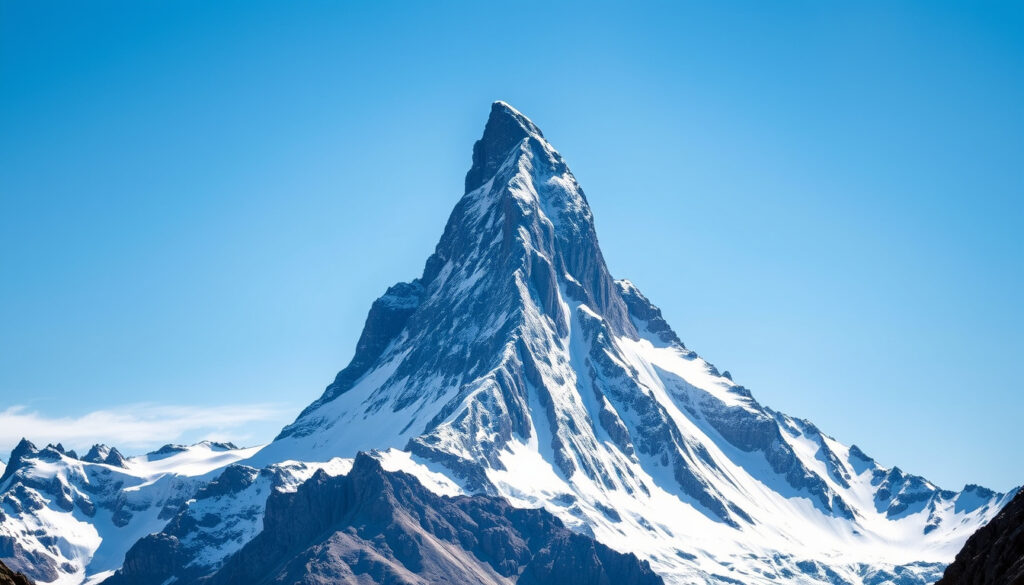
Matterhorn Mountain: Height, Climbing Difficulty & Facts
The Matterhorn’s near-perfect pyramid silhouette is almost certainly lodged in your memory – maybe from a Toblerone wrapper, a travel poster, or a friend’s Instagram shot. But behind that postcard beauty lies one of Europe’s most dangerous climbs, a peak that has claimed over 500 lives since the first ascent in 1865.
Height: 4,478 m (14,692 ft) ·
Location: Swiss-Italian border, Pennine Alps ·
First Ascent: July 14, 1865 ·
Annual Climbers: ~3,000 ·
Total Deaths (since 1865): Over 500
Quick snapshot
- Matterhorn is 4,478 m tall (Zermatt tourism office)
- First ascent on July 14, 1865 (American Alpine Club Publications)
- Summit lies on Swiss-Italian border (Britannica)
- Exact annual climber count varies (2,500–3,500)
- Whether Matterhorn is technically “harder” than Everest depends on criteria
- Precise cause of the 1865 rope break is debated
- 1865: First ascent tragedy kills four of seven climbers (Climbing.com)
- Aug 2024: Three climbers die on the Hörnli route in one week (Climbing.com)
- Guided climbs continue with ~3,000 attempts yearly
- Climate change is altering route conditions
The physical and historical dimensions of the mountain are defined by eight key specifications.
| Attribute | Value |
|---|---|
| Height | 4,478 m (14,692 ft) |
| First Ascent | July 14, 1865 |
| Location | Swiss-Italian border, Pennine Alps |
| Mountain Range | Pennine Alps / Monte Rosa area |
| Most Popular Route | Hörnli Ridge (Swiss side) |
| Annual Climbers | Approximately 3,000 |
| Total Deaths | Over 500 since 1865 |
| Highest Mountain in Switzerland? | No (Monte Rosa is higher at 4,634 m) |
Why is Matterhorn mountain so famous?
Iconic pyramid shape
- The Matterhorn’s near-symmetrical pyramid peak is labeled the most photographed mountain in the world, according to the Zermatt tourism site (Zermatt tourism office).
- Its four steep faces rise from four distinct ridges, giving it a striking, isolated look that no other Alpine peak matches.
The visual distinction is so strong that the mountain has become the primary symbol of the Swiss Alps, even though it straddles the border with Italy.
First ascent tragedy
- On July 14, 1865, a party led by Edward Whymper reached the summit via the Hörnli Ridge. During the descent, four of the seven climbers fell to their deaths after a rope broke (American Alpine Club Publications).
- The disaster shocked the public and cemented the Matterhorn’s reputation as a deadly peak.
The 1865 tragedy set a grim precedent: even an experienced team can face catastrophic failure on a mountain that looks deceptively simple.
Cultural symbol (Toblerone, photography)
- The Matterhorn’s silhouette appears on Toblerone chocolate packaging, making it one of the most recognised mountain shapes globally.
- It is frequently described as the “landmark of Switzerland” by the Swiss tourism board (Zermatt tourism office).
Commercial branding has made the Matterhorn an unavoidable visual reference – but that fame often hides the harsh reality of the climb.
What country owns the Matterhorn?
Border between Switzerland and Italy
- The summit of the Matterhorn sits exactly on the Swiss-Italian border (Wikipedia).
- Neither country “owns” the peak outright; it is shared, with official boundary markers at the top.
Canton of Valais
- The Swiss side falls within the Canton of Valais, a region known for alpine tourism and the resort of Zermatt.
Access points (Zermatt, Cervinia)
- The main Swiss access is Zermatt, which is car-free and served by train (Zermatt tourism office).
- The Italian side is accessed via Breuil-Cervinia in the Aosta Valley.
The trade-off: each side offers a different route character – the Swiss Hörnli Ridge is the most popular, while the Italian Liongrat route is more exposed.
What’s harder, Matterhorn or Everest?
Technical difficulty
- The Matterhorn requires advanced rock and ice climbing skills on steep, exposed terrain. It is graded as a high-alpine climb that takes between 8 and 12 hours round-trip (Adventure Base).
- Everest’s standard route is less technically demanding but involves extreme altitude, deep snow, and icefall hazards.
Altitude and acclimatization
- Matterhorn summit: 4,478 m – altitude sickness risk is moderate, but acclimatisation days are typical.
- Everest summit: 8,848 m – requires weeks of acclimatisation and supplemental oxygen.
Death rate comparison
- The Matterhorn’s fatality rate is about 1% of climbers (ExplorersWeb).
- Everest’s fatality rate is similar in percentage, but absolute numbers are higher due to more climbers.
Five dimensions show one pattern: technical difficulty and altitude create a trade-off that neither mountain simplifies.
| Dimension | Matterhorn | Everest |
|---|---|---|
| Technical Difficulty | High (rock & ice, exposed ridges) | Moderate (standard route, less technical) |
| Altitude | 4,478 m (14,692 ft) | 8,848 m (29,032 ft) |
| Acclimatisation | Days (moderate risk) | Weeks (extreme risk) |
| Fatality Rate | ~1% of climbers | ~1% of climbers |
| Climbing Duration | 8–12 hours (from hut) | ~2 months (expedition) |
The implication: calling one “harder” is misleading – the Matterhorn punishes technical errors instantly, while Everest punishes altitude and endurance failures over weeks.
Can beginners climb the Matterhorn?
Required experience
- True beginners (those with zero prior climbing experience) should not attempt the Matterhorn. The standard route involves Grade 2–3 scrambling on rock and ice with exposed sections (Mountain Tracks guide).
- Guides recommend at least a season of alpine rock and ice climbing before considering the climb.
Guided ascents
- Commercial trips like those offered by Mountain Madness label the climb as “intermediate” difficulty and provide 1:1 guiding (Mountain Madness).
- Preparation typically includes months of training and several practice climbs on similar terrain.
Preparation and training
- A Matterhorn preparation guide from SummitGuides recommends building fitness through running, cycling, and climbing gym sessions, plus experience on peaks like Mont Blanc (SummitGuides).
- The climb is physically demanding – 9 to 12 hours of continuous movement at altitude.
A beginner who skips proper preparation faces a disproportionate risk of serious injury or death, because the Matterhorn offers no easy bail-out once committed to the ridge.
Do people still climb the Matterhorn?
Annual climbing statistics
- About 3,000 climbers attempt the Matterhorn each year (Zermatt tourism office).
- Numbers fluctuate due to weather, access restrictions, and – in recent years – the COVID-19 pandemic.
Popular routes (Hörnli, Liongrat)
- The Hörnli Ridge on the Swiss side is by far the most used route, featuring fixed ropes and hut accommodation.
- The Italian Liongrat route is less crowded but more exposed to rockfall.
Safety and fatalities today
- Despite improvements in gear and route management, fatalities continue. In August 2024, three climbers died on the Hörnli route within a single week (Climbing.com).
- A DW documentary reports that over 600 climbers have died on the Matterhorn since 1865 (DW documentary).
The pattern: climbing activity is steady, but each year brings incidents that underline how unforgiving the mountain remains.
Specifications table
Additional metrics provide context for climbers planning an ascent.
| Specification | Value |
|---|---|
| Climbing duration (average) | 8–12 hours round-trip (Adventure Base) |
| Route difficulty (Hörnli) | Grade 2–3 scrambling (Mountain Tracks guide) |
| Best climbing season | June–September |
| Guided ratio (typical) | 1:1 (Mountain Madness) |
| Number of huts on route | 2 (Hörnlihütte, Solvayhütte) |
| Fixed ropes present | Yes (installed 2000) |
| Annual fatalities (average) | 3–4 deaths |
| Record ascents in one day | Over 100 (2015) |
Timeline: key climbing milestones
- 1865 – First ascent by Edward Whymper’s party; four climbers die during descent.
- 1931 – First solo ascent by Franz Schmid.
- 1960s – Increased popularity; guided climbs become standard.
- 2000 – Installation of fixed ropes and safety improvements on Hörnli route.
- 2015 – Record number of ascents in a single day (over 100).
- 2020–2023 – Ongoing climbing activity with continued fatalities; COVID-19 impact on tourism.
- August 2024 – Three climbers die on Hörnli route within one week (ExplorersWeb).
Clarity: what we know and what remains uncertain
Confirmed facts
- Matterhorn is 4,478 m tall (Zermatt tourism office)
- First ascent was on July 14, 1865 (American Alpine Club Publications)
- The summit lies on the Swiss-Italian border (Britannica)
- Over 500 deaths have occurred on the mountain (Wikipedia)
- Three climbers died in August 2024 on the Hörnli route (Climbing.com)
What’s unclear
- Exact number of annual climbers varies by source (2,500–3,500)
- Whether Matterhorn is technically “harder” than Everest depends on criteria (technical vs altitude)
- The precise cause of the 1865 rope break is debated (American Alpine Club Publications)
Quotes on climbing the Matterhorn
“The Matterhorn is a mountain that can only be climbed by those who are prepared to risk their lives.”
– Edward Whymper, first ascensionist (paraphrased)
“The Matterhorn is the most photographed mountain in the world.”
– Matterhorn Paradise official site
“The Matterhorn is the landmark of Switzerland.”
– Swiss tourism board (Zermatt tourism office)
Summary
The Matterhorn’s allure is as powerful as its danger. It draws thousands of climbers each year to a peak that has taken more than 500 lives since 1865, and continues to claim victims annually. For any aspiring alpinist, the choice is clear: invest in serious preparation, respect the mountain’s technical demands, or face consequences that no postcard can convey. The Swiss tourism industry must manage this unmatched asset with constant safety management and honest communication about risk.
Related reading: Mount Everest Peak · Great White Shark
Frequently asked questions
Has anyone ever climbed to the top of the Matterhorn?
Yes. The first successful ascent was on July 14, 1865, led by Edward Whymper. Since then thousands of climbers have reached the summit via several routes.
Is Matterhorn the highest mountain in Switzerland?
No. Monte Rosa (4,634 m) is the highest peak entirely within Switzerland. The Matterhorn is 4,478 m.
How tall is the Matterhorn?
4,478 metres (14,692 feet).
Where is the Matterhorn located?
On the border between Switzerland and Italy in the Pennine Alps, near the resort of Zermatt (Swiss side) and Breuil-Cervinia (Italian side).
Why does the Matterhorn seem harder than Everest?
Because it requires advanced rock and ice climbing skills with no room for error, while Everest’s challenge is primarily altitude and stamina. The risk of a fatal fall is higher on the Matterhorn.
How many people have died climbing the Matterhorn?
Over 500 since 1865, with an average of 3–4 deaths per year in recent decades.
What is the best time of year to climb the Matterhorn?
The climbing season typically runs from June to September, when weather conditions are most stable and fixed ropes are in place.
More related posts
 Vince Colosimo: Legal Troubles and Life Story
 Agnetha Fältskog: Biography, Net Worth, and Life After ABBA
 Free Solitaire Online: 5 Best Sites to Play Without Download
 Mini Fridge Kmart: Models, Prices & Bedroom Safety Guide
 Steel Garden Edging – Installation Guide and Brand Reviews
 Jon Jones: Undefeated Record, Retirement, and Legal Charges
 Ty Doran: Height, Age, and Manifest Role Explained
 Tim Wilson: Politician, Comedian, Academic – Who’s Who
