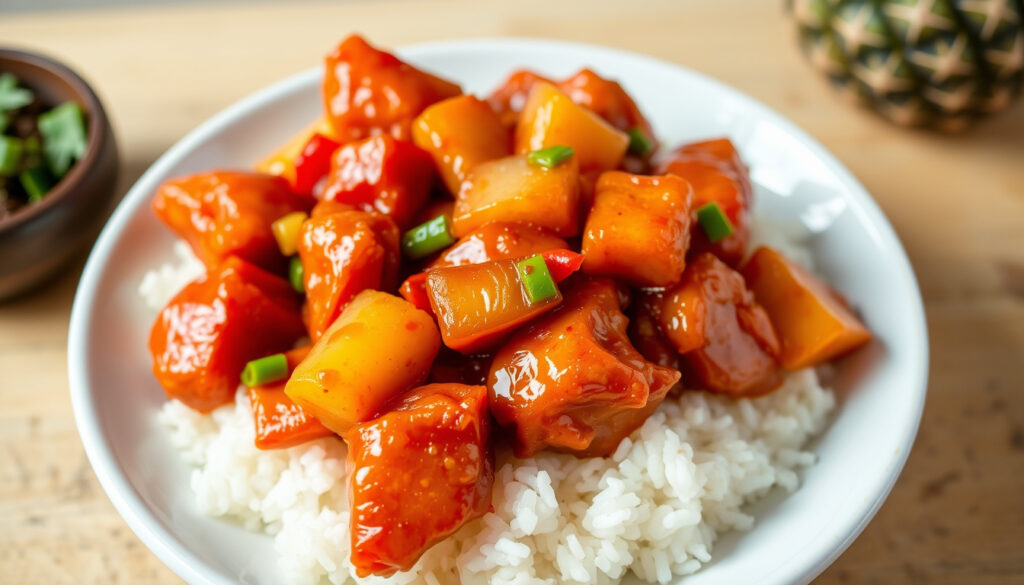
Sweet and Sour Chicken Recipe: Easy Crispy Takeaway Style
Sweet and sour chicken is the only copycat recipe that actually delivers on its promise. This homemade version gets you crispy, sticky, tangy chicken in under 30 minutes with a double-fry technique and a sauce that rivals any takeaway.
Serves: 5 · Prep time: 15 minutes · Cook time: 15 minutes · Total time: 30 minutes · Calories per serving: 400
Quick snapshot
- Sauce base: ketchup, vinegar, sugar, cornstarch (Tornadough Alli)
- Double-fry at 350°F for extra crispiness (CJ Eats Recipes)
- Cantonese-style cuisine shapes American Chinese versions (Mashed)
- Exact calorie variations between homemade and takeaway versions
- Whether authentic Eastern China recipes predate American adaptations
- Optimal pineapple-to-pepper ratio for traditional Cantonese style
- Online recipes with crispy batter techniques proliferated in the 2010s–2020s (Two Plaid Aprons)
- James Beard Award-winning chef shared family adaptation in 2023 (Made with Lau)
- Baked alternatives gaining traction for health-conscious home cooks
- Air fryer adaptations emerging as a lower-oil option
- Regional Chinese variations driving new recipe iterations
Key ingredients and cooking parameters define this takeaway staple.
| Label | Value |
|---|---|
| Origin | Chinese takeaway classic |
| Key flavors | Sweet, sour, tangy |
| Common protein | Chicken breast or thigh |
| Typical veggies | Onions, peppers, pineapple |
| Frying temperature | 350–375°F |
| Marinate time | 20 minutes |
What are the main ingredients in sweet and sour chicken?
Three layers build this dish: the protein, the vegetables, and the sauce that ties everything together. Each component has room for variation, but the backbone stays consistent across American Chinese and Eastern China approaches.
Chicken
- Chicken breast or thigh cut into 2-inch pieces works best for even frying (CJ Eats Recipes)
- Marinate with light soy sauce, salt, white pepper, egg, and flour for 20 minutes before cooking (CJ Eats Recipes)
- Thigh meat stays juicier; breast is leaner but can dry out if overcooked
Vegetables
- Bell peppers, onions, and pineapple chunks form the classic American Chinese trio (Two Plaid Aprons)
- Eastern China style skips pineapple entirely, relying on ginger and scallions instead (Cooking with Yeye)
Sauce components
- Thickened sweet-sour sauce binds the dish — typically ketchup, vinegar, sugar, and cornstarch slurry (Tornadough Alli)
- American versions lean heavier on ketchup; authentic styles use rice wine vinegar and omit tomato entirely (Mashed)
The implication: swapping chicken thigh for breast cuts fat but risks moisture loss — choose based on your priority between texture and nutrition.
What are the 4 ingredients in sweet and sour sauce?
The sauce comes down to four pillars: something sweet, something sour, something to bind them, and liquid to tie it all together. Every recipe varies slightly, but these four categories never change.
Core sauce elements
- Ketchup — 1–3 tablespoons, depending on how tomato-forward you want the flavor (The Woks of Life)
- Vinegar — rice wine vinegar preferred, white or red wine vinegar as substitutes (The Woks of Life)
- Sugar — 1 cup in most American recipes; crystal sugar in Eastern China variants (Tornadough Alli)
- Cornstarch — 1 tablespoon dissolved in water to thicken the sauce into a glossy coating (Tornadough Alli)
Vinegar and sugar balance
- Equal parts sweet and sour creates the signature tang; too much vinegar tastes sharp, too much sugar turns cloying
- Fresh pineapple juice adds natural sweetness while maintaining acidity — something processed pineapple syrup cannot replicate (The Woks of Life)
The pattern: amateur recipes over-sweeten; authentic versions let vinegar’s brightness cut through the sugar. Start conservative, taste, adjust.
What is the secret to the best sweet and sour sauce?
Every recipe claims a secret. Most of them are real — just buried under technique rather than exotic ingredients.
Balance flavors
- Fresh pineapple juice outperforms bottled concentrate — it contributes acidity without artificial sweetness (The Woks of Life)
- Adding chicken stock instead of plain water deepens the savory backbone of the sauce (The Woks of Life)
- American versions prioritize pineapple and ketchup-heavy profiles; authentic Chinese styles avoid both entirely (Cooking with Yeye)
Thickening technique
- Mix cornstarch with cold water first — adding starch directly to hot liquid creates lumps
- Pour slurry slowly while stirring; sauce should coat a spoon thickly before you remove it from heat
- Double-frying the chicken creates a crust that holds up to sauce without becoming soggy (CJ Eats Recipes)
The double-fry method is non-negotiable for restaurant-quality texture: first pass at 350°F for 3–4 minutes sets the structure, second pass for 1–2 minutes blows out moisture and locks in crunch.
What this means: even if your sauce is perfect, soggy chicken lets the whole dish down. The fry technique matters as much as the recipe.
How do you make Chinese takeaway sweet and sour sauce?
Takeaway sauce isn’t complicated — it just requires the right ratios and a few tricks that professional kitchens use but home cooks often skip.
Step-by-step sauce
- Combine 1 cup sugar, ½ cup rice or white vinegar, ½ cup water, and 3 tablespoons ketchup in a saucepan (Tornadough Alli)
- Bring to a gentle simmer over medium heat, stirring until sugar dissolves completely
- Mix 1 tablespoon cornstarch with 2 tablespoons cold water, then pour into sauce while stirring
- Simmer 2–3 minutes until the mixture turns glossy and coats the back of a spoon
- Add pineapple juice for tropical brightness, or skip for a more savory profile (The Woks of Life)
Takeaway tricks
- Add a few drops of red food coloring — this is purely visual, but the deep orange color signals “authentic” to most takeout fans
- Use rice vinegar over white vinegar for cleaner acidity that doesn’t dominate the sweetness
- Keep sauce warm while frying chicken — cold sauce causes instant steam on contact, leading to soggy coating
The catch: takeaway sauce often uses more sugar than homemade recipes call for — that’s why it tastes better but also why you feel the crash an hour later.
How to make easy sweet and sour chicken recipe?
Here’s the full method broken into three stages: prep, fry, and sauce. Total time runs about 30 minutes from start to plate.
Batter and fry
- Cut chicken into 2-inch pieces; toss with 2 tablespoons cornstarch, salt, white pepper, and egg white (CJ Eats Recipes)
- Coat with a thin batter of all-purpose flour, cornstarch, baking powder, and just enough water to cling (Tornadough Alli)
- Heat oil to 350°F in a wok or Dutch oven; fry chicken in batches without crowding
- First fry: 3–4 minutes until pale. Second fry: 1–2 minutes until deeply golden and crispy (CJ Eats Recipes)
- Drain on paper towels immediately — resting on a wire rack keeps bottom from steaming
Combine with sauce
- Make sauce ahead and keep warm; add bell peppers, onions, and pineapple to the pan for 2 minutes
- Pour sauce over vegetables, thicken with cornstarch slurry, then toss in fried chicken
- Work quickly over high heat — the goal is every piece coated and glistening, not swimming in liquid
Variations
- Baked version: Toss chicken in cornstarch, spray with oil, bake at 425°F for 20 minutes flipping halfway — less crispy but cuts calories noticeably
- Chicken balls: Roll chicken into walnut-sized balls, same double-fry technique, serve with extra sauce for dipping
- Eastern China style: Skip ketchup and pineapple; use crystal sugar, ginger, Shaoxing wine, and Zhenjiang vinegar for a completely different profile (Cooking with Yeye)
Regional styles compared
Two sweet and sour chicken approaches, one clear distinction in philosophy: American versions chase sweetness while authentic Eastern styles preserve sour.
| Style | Key ingredients | Sauce base | Veggies |
|---|---|---|---|
| American Chinese | Ketchup, pineapple, crispy batter | Sugar, ketchup, cornstarch | Pineapple, peppers, onions |
| Eastern China | No ketchup, no pineapple | Crystal sugar, Zhenjiang vinegar | Ginger, scallions, bok choy |
| Desi Chinese | Lemon juice, garlic powder | Soy sauce, lemon | Onions, peppers |
The implication: choosing a style means choosing a flavor philosophy — sweet-forward American or sour-preserving authentic. Neither is definitively better; they satisfy different cravings.
Upsides
- Crispy texture rivals any takeaway when done right
- Sauce is endlessly adjustable to taste preferences
- Ready in under 30 minutes with pantry staples
- Kids love it; it’s a proven family dinner
Downsides
- Deep frying adds significant calories and fat
- Second fry is essential — skipping it ruins texture
- American versions use more sugar than nutritionally ideal
- Health-conscious alternatives sacrifice that signature crunch
What the experts say
“It’s the real home-style sweet and sour flavor. No ketchup, no pineapple, only tender meat smothered in a delicious sauce.”
— Cooking with Yeye (recipe author, Eastern China style)
“Sweet and Sour Chicken is probably your favorite American Chinese takeout dish but did you know you can easily make it at home?”
— CJ Eats Recipes (recipe creator)
“This Sweet and Sour Chicken recipe is a twist on classic Sweet and Sour Pork that swaps out the protein for one that’s leaner.”
— Made with Lau (James Beard Award-winning chef)
The Cantonese immigration influence explains why American sweet and sour chicken tastes nothing like its Chinese counterpart — and why both versions claim authenticity. Neither is wrong; they’re different dishes wearing the same name.
For home cooks willing to invest the 30 minutes, the payoff is real: crispy, sticky, tangy chicken that costs less than takeout and tastes better because you control every variable. The trade-off is standing over a hot wok — but that’s a small price for results that make you reconsider ever calling for delivery again.
Related reading: How to Make Cabbage Slaw · Ounce to Ml
Crispy double-fried chicken shines brightest when paired with a homemade sweet and sour sauce recipe that comes together in just 10 minutes for takeaway perfection.
Frequently asked questions
Is sweet and sour chicken gluten-free?
Standard recipes use wheat-based flour for batter and soy sauce for marinade — neither is gluten-free. Swap all-purpose flour for cornstarch or rice flour, and use tamari instead of soy sauce to make a gluten-free version without sacrificing the crispy texture.
Can you make sweet and sour chicken in an air fryer?
Yes — coat chicken in cornstarch, spray generously with oil, and air fry at 400°F for 12–15 minutes, shaking halfway through. The crust won’t match deep-fried crispiness, but it comes closer than expected and cuts oil usage dramatically.
What can I substitute for pineapple in sweet and sour chicken?
Mango chunks work well as a tropical-sweet substitute, though the acidity profile differs. For a more savory profile without fruit, increase vinegar slightly and add a splash of orange juice for brightness without pineapple’s sugars.
How long does sweet and sour chicken last in the fridge?
Cooked chicken components — sauce, vegetables, and chicken stored separately — keep 3–4 days refrigerated. Reheat chicken in a dry pan or air fryer to restore crispiness; sauce in a small saucepan until warmed through.
Is sweet and sour chicken keto-friendly?
Standard recipes use 1 cup of sugar and batter with flour — not keto. A keto version replaces sugar with erythritol or monk fruit, uses pork rinds instead of flour for coating, and skips pineapple. At roughly 400 calories per serving, the standard recipe fits a balanced diet but not ketosis.
What rice pairs best with sweet and sour chicken?
Steamed jasmine rice absorbs the sauce without overwhelming it. Fried rice works too but competes with the dish — the crispy coating gets lost. For low-carb options, cauliflower rice provides a neutral backdrop.
Can I use pork instead of chicken?
Absolutely — in fact, sweet and sour pork predates the chicken version in Chinese cuisine. Pork shoulder cut into 1-inch cubes fries evenly and absorbs sauce beautifully. A James Beard Award-winning chef’s family recipe swaps protein specifically to create a leaner option (Made with Lau).
More related posts
 Jon Jones: Undefeated Record, Retirement, and Legal Charges
 Neymar Jr: World Cup 2026 Chances, Children & Rumors
 Cincinnati Open 2025: Sinner Retires With Virus, Alcaraz Wins
 Qantas Frequent Flyer Login: Sign In, Recover & Check Points
 Jasmine Stefanovic: Age, Children, Net Worth, and Career
 Jude York: Age, Nationality, Mother’s Parkinson’s, and More
 Panwaburi Beachfront Resort: Good? Cost, Location & Reviews
 Breaking News Sydney Police: Latest Updates & Key Questions
