The Chestnut Man – Ending Explained Plot Cast Guide
The Chestnut Man, Netflix’s 2021 Danish crime thriller, follows detectives Naia Thulin and Mark Hess as they hunt a serial killer who leaves chestnut figurines at murder scenes bearing the fingerprint of a missing girl. Adapted from Søren Sveistrup’s debut novel, the six-episode miniseries delivers a tense Nordic noir narrative that climaxes with a shocking identity reveal.
What Is The Chestnut Man?
The Chestnut Man (original Danish title: Kastanjemanden) is a 2021 Netflix miniseries based on the 2018 debut novel by Danish screenwriter Søren Sveistrup, best known for creating The Killing. Premiering on September 29, 2021, the six-episode limited series blends psychological suspense with investigative procedural elements set in contemporary Copenhagen.
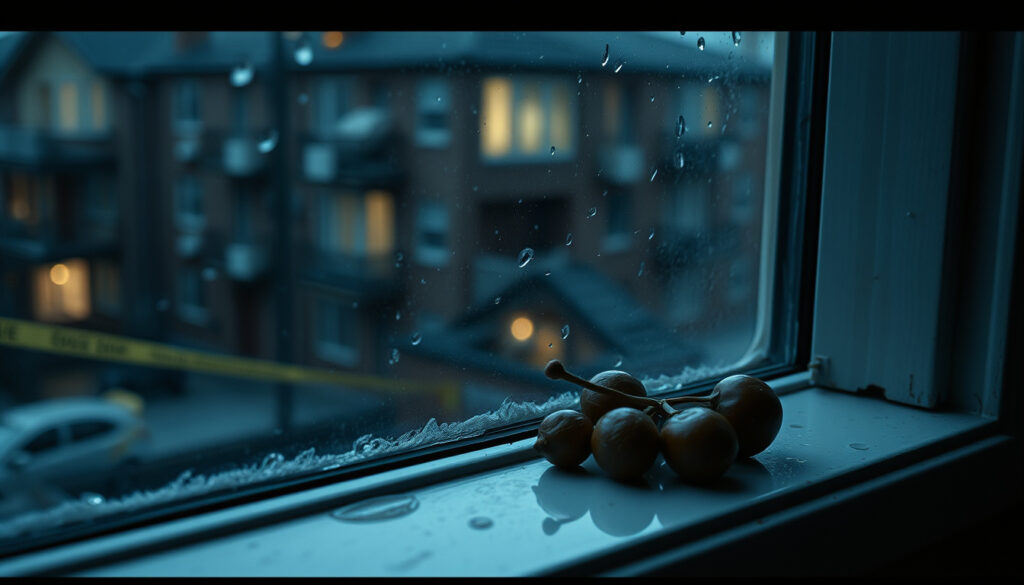
The story centers on detectives Naia Thulin (Danica Curcic) and Mark Hess (Mikkel Boe Følsgaard), who are assigned to investigate a series of brutal murders targeting mothers. Each victim’s body bears disturbing mutilations—specifically an eye gouged out and a hand severed—and a small chestnut figurine is deliberately left at each scene. Crucially, these figurines bear the fingerprint of Kristine Hartung, the young daughter of politician Rosa Hartung, who was reported missing months earlier.
Genre: Crime Thriller | Platform: Netflix | Episodes: 6 | Release Date: September 29, 2021 | Language: Danish with English subtitles
The narrative unfolds across two timelines. In 1987, an isolated farm family is massacred, but two foster children, Toke Bering and his sister Astrid, survive the slaughter. Decades later, the chestnut figurines begin appearing at crime scenes, and the investigation draws connections between the murders, Rosa Hartung’s political past, and the dark world of negligent mothers and failed foster care systems. Thulin and Hess follow forensic clues, encounter red herrings including a suspicious figure named Linus Bekker, and gradually uncover a web of grudges rooted in decades of childhood trauma.
Directed by Kasper Barfoed and Mikkel Serup, the series received strong critical reviews praising its atmospheric dread, sharp twists, and emotionally complex performances. Critics have described it as masterful Scandi noir comparable in tone to The Silence of the Lambs.
Is The Chestnut Man Based on a True Story?
The Chestnut Man is not based on a true story. The series is entirely fictional, drawing inspiration from established Nordic noir tropes rather than real events. Author Søren Sveistrup crafted the narrative for his debut novel, published in 2018 under the title Kastanjemanden, and the Netflix adaptation preserves the story’s fictional framework without direct real-world connections.
Understanding the Fiction
While The Chestnut Man incorporates realistic settings in Copenhagen, police procedures, and themes around child welfare and foster care systems, no confirmed real-life incidents or individuals inspired the plot. The story’s exploration of child trauma and maternal neglect reflects broader social commentary common in Scandinavian crime fiction rather than specific documented cases.
Multiple sources, including Wikipedia, confirm the series is pure fiction. Søren Sveistrup, the creator, has not cited specific real events as inspiration for the narrative.
The Chestnut Man Ending Explained: Who Is the Killer?
The finale of The Chestnut Man delivers a major twist that reframes the entire investigation. Simon Genz (David Dencik), the forensic expert assisting the detectives throughout the series, is unmasked as the Chestnut Man himself. He is revealed to be Toke Bering, one of the foster children who survived the 1987 farm massacre. After changing his identity at age 18, Genz built a new life while secretly orchestrating the string of murders.
The Killer’s Motivation
Simon Genz operates under deep-seated grudges against mothers who abandon their children. He holds Rosa Hartung personally responsible for his trajectory into an abusive foster placement after her family briefly housed him as a child. Rosa had signed off on decisions regarding child custody during her time in government, a fact that Genz fixates on as the source of his suffering.
His methodology—leaving chestnut figurines bearing Kristine Hartung’s fingerprint—was designed to draw attention to Rosa and punish her for what he perceived as her complicity in failing vulnerable children. The missing Kristine, it turns out, was abducted by Genz and held captive, her prints placed on the figurines to implicate her mother.
The Climactic Confrontation
In the series finale, Genz kidnaps Thulin and takes her to an abandoned chestnut farm. He sets the property ablaze while holding hostages, including Rosa Hartung. Mark Hess arrives to intervene, and during the chaotic escape, Thulin forces Genz’s car off the road. The vehicle crashes into a tree, impaling Genz fatally on a branch. His death prevents further violence and brings the immediate threat to an end.
Investigators trace a phone call made from the farm to Genz’s sister Astrid, who is located in Germany according to most accounts, though some sources note the location is described as Poland in certain narrations. Astrid is found to be holding Kristine Hartung alive. She is arrested, and Kristine is rescued and reunited with her parents, bringing a measure of closure to the Hartung family.
The connection between Linus Bekker and Simon Genz remains unexplained within the series. Bekker is depicted as someone aware of the killer’s identity who nevertheless stays loyal to him throughout the investigation. Whether Bekker shares a foster care history with Genz or simply admires his crimes is left deliberately ambiguous.
The Chestnut Man Cast and Where to Watch
The series features a focused ensemble centered on its two lead detectives. Danica Curcic delivers what critics describe as a commanding performance as Naia Thulin, a detective navigating professional pressures alongside personal concerns involving her daughter. Mikkel Boe Følsgaard co-stars as her partner Mark Hess, bringing a grounded counterbalance to the investigation. David Dencik portrays Simon Genz with unsettling subtlety, constructing a character whose quiet demeanor makes the final revelation all the more disturbing.
Primary Cast
- Naia Thulin — Played by Danica Curcic
- Mark Hess — Played by Mikkel Boe Følsgaard
- Simon Genz / Toke Bering / The Chestnut Man — Played by David Dencik
- Rosa Hartung — Played by Iben Ellefsen
- Steen Hartung — Played by Esben Dalgaard Andersen
Supporting roles include Thulin’s daughter, families of the murder victims, and figures like Benedikte Skans, who serve as narrative red herrings during the investigation. The cast remains relatively contained, allowing character development to concentrate on the core detectives and the antagonist.
The series is available exclusively on Netflix with Danish audio and multilingual subtitle options. The miniseries functions as a self-contained story with a conclusive ending, and it has been marketed as a limited series with no confirmed sequel plans.
Critical Reception
Reviews have been broadly positive, with critics highlighting the series as a standout entry in the Nordic noir genre. Screen Rant praised the atmospheric dread sustained across six episodes, the emotional complexity surrounding themes of parental failure and child neglect, and a finale that provides what several outlets describe as a thorough and satisfying wrap-up. The performances of Curcic and Dencik received particular commendation. Some critics noted that certain red herring characters, particularly Bekker, felt underdeveloped in the adaptation’s compressed format.
The series is directed by Kasper Barfoed and Mikkel Serup, working from Søren Sveistrup’s source material. Production took place primarily in Copenhagen, Denmark, utilizing urban and rural locations including playgrounds, police stations, and the key abandoned chestnut farm site. For those interested in other crime dramas with similar atmospheric tension, Unforgotten Season 6 offers another example of slow-burn investigative storytelling.
The Chestnut Man Book vs Netflix Series Differences
The Netflix adaptation follows Søren Sveistrup’s original 2018 novel closely, maintaining the core narrative structure from the 1987 prologue through the farm confrontation and Kristine’s rescue. Both versions share the central mystery, the identity reveal of Toke Bering as the Chestnut Man, and the thematic focus on child trauma, failed foster care, and intergenerational harm.
Notable Variations
Despite the overall fidelity, some minor differences emerge between the two versions. The precise location of Astrid’s residence varies between accounts referenced in the adaptation—one narrative thread places her in Germany while another suggests Poland. These small variances affect the geographical detail of the resolution without altering the fundamental outcome.
The role of Linus Bekker presents the most notable ambiguity in the adaptation. His exact connection to Simon Genz is not fully explained in the series, leaving viewers uncertain whether he shares a foster care background with the killer or simply developed an admiration for Genz’s crimes. The novel may address this thread more explicitly, though detailed comparative analyses are limited in available sources.
Subplots involving supporting characters such as Benedikte Skans and the families of various victims are compressed in the series format, reflecting the natural differences between a six-episode television adaptation and a full-length novel. The adaptation’s tighter structure sacrifices some character depth in exchange for narrative momentum.
The Chestnut Man Production Timeline
The Chestnut Man originated as Søren Sveistrup’s debut novel, published in Danish in 2018. Best known for his television work on The Killing and The Keeper of Lost Causes, Sveistrup applied his investigative thriller expertise to prose fiction for the first time. The novel introduced the story of the chestnut figurines, the 1987 massacre, and the present-day Copenhagen investigation that forms the series’ backbone.
- 2018 — Søren Sveistrup publishes the novel Kastanjemanden in Denmark.
- 2021 — Netflix greenlights and releases the six-episode adaptation on September 29.
- Post-2021 — The series concludes as a limited series with a conclusive ending and no announced continuation.
Filming for the Netflix series took place in and around Copenhagen, Denmark, with production design incorporating urban playgrounds, police department interiors, and a deliberately desolate rural chestnut farm as the climactic location. The setting reinforces the isolated, claustrophobic atmosphere central to the series’ tone.
Confirmed Facts and Remaining Uncertainties
A clear distinction exists between what is confirmed about The Chestnut Man and what remains open to interpretation or dependent on secondary sources.
| Established Information | Information Requiring Clarification |
|---|---|
| Series premiered September 29, 2021 on Netflix | Precise details of Bekker’s relationship to Genz |
| Created by Søren Sveistrup; novel published 2018 | Whether the novel’s subplots are substantially different in scope |
| Simon Genz is Toke Bering, adult survivor of 1987 massacre | Exact location of Astrid’s residence (Germany vs. Poland) |
| Series is fiction; not based on a true story | Whether Sveistrup has publicly discussed sequel potential |
| Limited series format; no confirmed continuation | Availability of extended or director’s cut episodes |
| Filmed in Copenhagen, Denmark | Full extent of production differences between novel and series |
The Chestnut Man’s Thematic Context
The series operates within the well-established tradition of Nordic noir, a subgenre characterized by psychological darkness, corrupt institutions, and crimes rooted in family dysfunction. The Chestnut Man extends this tradition by placing the investigation of a serial killer in direct conversation with systemic failures in child welfare. The foster care system, maternal neglect, and intergenerational trauma function not merely as backstory but as the structural engine driving both the murders and the investigation.
The repeated motif of the chestnut figurine—small, handcrafted, deliberately placed—serves as the series’ visual anchor. These objects simultaneously taunt the police, implicate a grieving mother, and represent the kind of discarded childhood that defines the killer’s worldview. The choice of chestnuts, tied to a specific harvest and a specific farm, connects the 1987 prologue to the present-day murders with methodical precision.
Critical reception has framed the series’ emotional core around the theme of parental failure. Rosa Hartung’s guilt over her past decisions, the absent mothers targeted by the killer, and Thulin’s own concerns about her daughter all orbit the same question: what do children deserve from the adults responsible for them? The finale resolves the mystery but does not fully resolve these thematic tensions, leaving the series’ most lasting impression less about whodunit and more about why communities fail the children in their care.
Sources and Perspectives
Critics have described The Chestnut Man as masterful Scandi noir, with tense twists, atmospheric dread, and emotional depth on parental failure, comparing it to The Silence of the Lambs.
Reviews highlight strong performances—especially from Danica Curcic and David Dencik—and a satisfying finale, though some note red herrings feel underdeveloped in the compressed series format.
Information in this article draws from multiple published sources covering the series’ plot, production, and reception. Key references include Wikipedia’s comprehensive entry on the series, detailed analyses from Screen Rant, Collider, and Digital Spy, as well as reviews from specialized outlets including Foreign Crime Drama and Looper. The original novel by Søren Sveistrup serves as the foundational source for the adaptation’s narrative.
Summary
The Chestnut Man is a six-episode Danish crime thriller that premiered on Netflix in September 2021, adapted by Søren Sveistrup from his own 2018 novel. The series combines a chilling serial killer premise with themes of child neglect, foster care failure, and intergenerational trauma. Detectives Naia Thulin and Mark Hess unravel clues embedded in chestnut figurines to identify Simon Genz as the Chestnut Man, revealed to be Toke Bering, sole survivor of a 1987 farm massacre. A climactic showdown at a chestnut farm ends with the killer’s death, Kristine Hartung’s rescue, and a thorough resolution of the mystery. The series stands as a self-contained limited series with no confirmed continuation. Viewers seeking similar Nordic crime dramas may also consider The Gentlemen (2024 TV Series) as an alternative atmospheric thriller.
Frequently Asked Questions
Is The Chestnut Man based on a true story?
No. The Chestnut Man is entirely fictional and is not based on a true story. It is adapted from a 2018 novel by Søren Sveistrup, who has not cited specific real events as inspiration.
Who is the killer in The Chestnut Man?
Simon Genz, portrayed by David Dencik, is revealed as the Chestnut Man. He is identified as Toke Bering, a foster child who survived a 1987 farm massacre and later changed his identity.
What is The Chestnut Man about?
The series follows detectives investigating murders of mothers connected by chestnut figurines bearing the fingerprint of missing girl Kristine Hartung. The investigation reveals a serial killer motivated by grudges against negligent mothers.
When was The Chestnut Man released on Netflix?
The Chestnut Man premiered exclusively on Netflix on September 29, 2021, as a six-episode limited series.
Are there differences between the book and the Netflix series?
The adaptation closely follows the novel’s core plot, including the 1987 prologue, the killer’s identity reveal, and the climax. Minor differences exist in subplots and certain geographical details, such as the exact location of Astrid’s residence.
Will there be a second season of The Chestnut Man?
No sequel has been confirmed. The series is marketed as a limited series with a conclusive ending, and the narrative does not set up unresolved threads for continuation.
Who created The Chestnut Man?
Søren Sveistrup, the Danish screenwriter behind The Killing and The Keeper of Lost Causes, wrote both the 2018 novel Kastanjemanden and served as the primary creative force behind the Netflix adaptation.
Where was The Chestnut Man filmed?
The series was primarily filmed in and around Copenhagen, Denmark, utilizing locations including urban environments, police department settings, and an abandoned rural chestnut farm used in the climactic finale.
More related posts
 Jon Bernthal: Ethnicity, Sobriety, Daughter’s Illness, Career
 Kareena Private Hospital – Address Services Contacts
 Darth Maul: Why He Lost the Darth Title and His Death
 What Is a 3D Filament? Types, Materials & Compatibility
 House of the Dragon Episodes: Full List in Order All Seasons
 Riley Thilthorpe: Height, Stats, Injury Update & Personal Life
 Eva Green: Biography, Marriage, Dispute, and Career
 Arsenal vs Bayern: Head-to-Head, 10-2 Thrashing & Next Match
