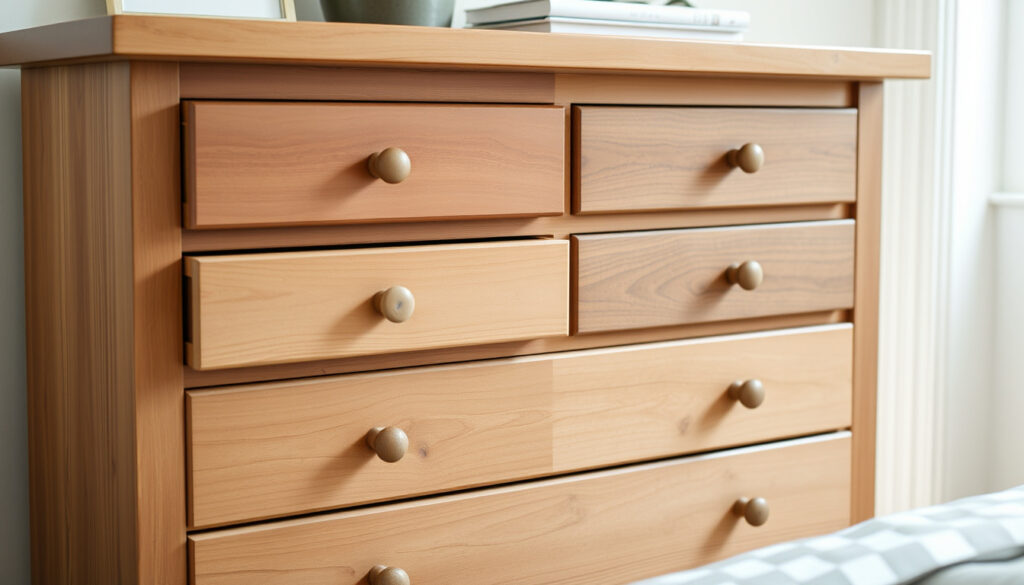
Chest Drawer Buying Guide: Types, Materials, Sizes
Finding the right chest drawer can feel like a puzzle with missing pieces, but a few practical measurements and a clear idea of your storage needs can turn that confusion into a confident purchase. This guide walks through the key dimensions, material trade-offs, and brand options so you know exactly what to look for.
Typical drawer count: 3 to 9 · Common heights: 70–130 cm · Common widths: 40–100 cm · Popular materials: Solid wood, MDF, metal, veneer · Price range: $50–$500 · Leading brands: IKEA, JYSK, Laura James, Des Kelly
Quick snapshot
- Chest drawers are used for bedroom storage, typically for clothes (Land of Beds)
- They come in sizes from 3 to 7 drawers (Land of Beds) (Land of Beds)
- Solid wood is the most common premium material (Elysra Living)
- Exact market share of individual brands (Mattress Miracle)
- Consumer preferences by region remain largely unmeasured (Roseland Furniture)
- Typical purchase cycle from research to delivery is 1–2 weeks (ManoMano)
- Measure your room and choose a style that fits your decor (Roseland Furniture)
- Compare prices and check delivery options before buying (ManoMano)
The average chest drawer buyer gravitates toward solid wood, six drawers, and a mid-range price point.
| Attribute | Value |
|---|---|
| Most common material | Solid wood |
| Average price | $150 |
| Most popular drawer count | 6 |
| Typical brand | IKEA |
What Is a Chest Drawer?
A chest drawer — also called a chest of drawers — is a freestanding piece of furniture with multiple stacked drawers. It’s primarily used in bedrooms for storing clothes, linens, and personal items. According to Land of Beds, chests of drawers typically range from 3 to 7 drawers, depending on the storage needs of the owner.
Types of chest drawers
- Traditional wooden chests — made from solid oak, pine, or ash; durable and refinishable (Elysra Living)
- Modern metal chests — often lighter, with a sleek industrial look; used in contemporary spaces (Mattress Miracle)
- Narrow tall chests — ideal for small rooms, usually 45–70 cm wide, 60–75 cm high (Elysra Living)
- Wide low chests — often used as a dresser with a mirror, 100–140 cm wide and 75–85 cm high (Elysra Living)
Common materials
Solid hardwoods like oak and ash are more durable and can be refinished over decades, but they cost more and are heavier. Real-wood veneer over an engineered core resists warping in heated rooms at a lower price, while painted MDF offers the widest colour choice and a uniform finish (Elysra Living).
Solid wood costs 2–3× more than MDF but lasts decades. For a rental or temporary room, MDF or veneer gives you the look without the weight.
Typical sizes
UK expert ManoMano gives example formats: a small 3-drawer chest at 70 cm wide × 90 cm high × 35 cm deep, and a large-capacity 3-drawer chest at 90 cm wide × 80 cm high × 40 cm deep. A nappy-changing chest of drawers can be 120 cm wide × 98 cm high × 55 cm deep, or 78 cm high with a detachable changing surface.
How to Choose the Right Chest Drawer for Your Bedroom?
Selecting a chest drawer involves balancing room dimensions, storage needs, and style. Here are the steps, backed by buying guides from UK and North American retailers.
Step 1: Measure your available space
Leave at least 60 cm of clear floor space in front of the chest so drawers can open fully — Elysra Living recommends this. Roseland Furniture suggests at least 30 cm of clearance for comfortable access. Measure width, depth, and height of the intended spot.
Step 2: Decide on the number of drawers
Think about what you’ll store. A 3-drawer chest works for accessories or children’s clothes, while a 6-drawer unit is popular for adults. Mattress Miracle notes that the 5-drawer chest is the most popular size category in its table.
Step 3: Choose a height that matches your bed
For bedside use, the chest top should be level with your mattress. Standard chest heights range from 70–130 cm. If you have a tall bed, a taller chest avoids a gap that collects dust.
Step 4: Pick a style and finish
Match the room’s existing furniture. Land of Beds identifies oak as strong with a distinctive grain, while pine is lightweight and budget-friendly with a knotty appearance. Painted MDF offers the widest colour choice.
A chest that’s too tall for the bed or too wide for the room will feel cramped and awkward. The right proportions make the room feel larger and more intentional.
Step 5: Check weight capacity and drawer glides
Solid wood with metal ball-bearing glides can hold 20–30 kg per drawer. MDF with plastic glides manage less. ManoMano advises checking the load rating on product pages, especially for heavy items like sweaters or bedding.
The pattern: invest in construction quality for items you’ll use daily. For occasional guest-room storage, a lighter build is acceptable.
What Are the Best Chest Drawer Brands and Where to Buy?
Several retailers dominate the chest drawer market across price points. Here’s a breakdown of popular options based on buying guides and product ranges.
IKEA chest drawers
IKEA offers affordable options from $50 to $250, with flat-pack assembly. The MALM and KULLEN series are among the most popular. IKEA provides a wide range of sizes and finishes.
JYSK chest drawers
JYSK has a variety of styles, from Scandinavian simple to rustic. Their prices typically range from $80 to $300, and they offer both solid wood and MDF options.
Laura James
Laura James focuses on modern designs, often with mid-century influences. Their chests are sold online with prices around $150–$400, and they emphasize style over budget.
Des Kelly Interiors
Des Kelly offers traditional and contemporary chests, generally in the $100–$350 range. They are a UK-based retailer with a strong online presence.
Online retailers
- ManoMano — DIY and home improvement marketplace with a wide selection of chests.
- Roseland Furniture — UK specialist with a range of sizes and materials.
- Mattress Miracle — Canadian blog with buying advice and product links.
The catch: brands like IKEA and JYSK offer consistent quality at low prices, but their MDF constructions may not survive a move. For a piece you’ll keep for decades, spending more on solid wood from a specialist like Laura James may be wiser.
Chest Drawer vs. Dresser: What’s the Difference?
These terms are often used interchangeably, but there are key differences in height, width, and typical usage.
Five common points of difference, one pattern: chest drawers are taller and narrower, while dressers are wider and shorter.
| Feature | Chest drawer | Dresser |
|---|---|---|
| Height | 70–130 cm (tall) | 60–90 cm (short) |
| Width | 40–100 cm (narrow) | 100–180 cm (wide) |
| Number of drawers | 3–7 | 6–12 |
| Mirror | Usually no mirror | Often includes a mirror or is designed to pair with one |
| Primary use | Bedroom, hallway, small spaces | Master bedroom, large closet |
According to Elysra Living, chest drawers are typically taller and narrower, while dressers are wider and often have a mirror. Both serve similar storage purposes, but the choice depends on your room shape and aesthetic preference.
Why this matters: in a narrow room, a chest drawer fits better. In a wide room with a large wall, a dresser provides more drawer space and a vanity area.
What Are the Standard Sizes and Specifications of Chest Drawers?
Exact dimensions vary by brand and style, but common ranges exist across UK and North American markets. The following table shows typical specifications.
Six measurements, one pattern: depth stays fairly constant (35–50 cm), while width and height adjust to suit the number of drawers.
| Specification | Typical range |
|---|---|
| Height | 70–130 cm (28–51 inches) |
| Width | 40–100 cm (16–39 inches) |
| Depth | 35–50 cm (14–20 inches) |
| Drawer height (per drawer) | 12–25 cm (5–10 inches) |
| Drawer width | 30–80 cm (12–31 inches) |
| Weight capacity per drawer | 10–30 kg (22–66 lbs) |
Data sources: ManoMano (UK examples), Mattress Miracle (North American examples), and Elysra Living. A North American guide from Mattress Miracle lists chest-of-drawers dimensions commonly around 30 to 40 inches wide, 48 to 60 inches tall, and 16 to 20 inches deep.
The trade-off: larger chests offer more storage but require more floor space. Always measure the intended spot and compare with the product’s exact dimensions before ordering.
Summary
Choosing a chest drawer is about matching size, material, and style to your room and budget. Solid wood offers longevity but at a higher price; MDF and veneer provide affordability and design flexibility. Brands like IKEA and JYSK cover the budget end, while Laura James and Des Kelly cater to style-conscious buyers. For the UK buyer, the decision is clear: if you plan to move in a few years, a flat-pack MDF chest from Roseland Furniture or ManoMano is practical. If you want a piece that lasts a lifetime, invest in solid oak from a specialist and assemble it yourself — or hire a handyman, because the weight alone will test your patience.
Related reading: chest of drawers buying guide · how to choose a chest of drawers
mattressmiracle.ca, loomlan.com, roomix.com, alibaba.com, goodhousekeeping.com, megafurniture.sg, meetfelix.ai, quercusliving.co.uk
Frequently asked questions
Can I use a chest drawer in a living room?
Yes, chest drawers work well in living rooms for storing DVDs, remote controls, blankets, or board games. Choose a style that matches your existing furniture, and ensure the height works with your sofa or TV unit.
How to clean a chest drawer?
Dust the exterior with a soft cloth. For wood, use a furniture polish occasionally. Wipe drawer interiors with a damp cloth and dry thoroughly. Avoid harsh chemicals that can damage the finish.
What is the difference between a chest of drawers and a bureau?
A bureau is a desk with drawers and a fold-down writing surface, while a chest of drawers is purely storage. Bureaus are less common today but still available as antique reproductions.
How much weight can a chest drawer hold?
Weight capacity varies by construction. Solid wood chests with metal glides can hold 20–30 kg per drawer, while MDF models with plastic glides hold about 10–15 kg per drawer. Check the product specifications before loading heavy items.
Are chest drawers easy to assemble?
Flat-pack models from IKEA, JYSK, and others require assembly, typically taking 30–60 minutes with basic tools. Pre-assembled chests are available from retailers like Laura James if you prefer convenience.
What is the best finish for a chest drawer?
Lacquer or polyurethane finish protects wood from moisture and scratches. For a natural look, wax or oil finishes are popular but require more maintenance. Painted MDF offers a durable, uniform colour that’s easy to clean.
More related posts
 Zara Larsson: Verified Facts on Health, Relationships, Career
 The Gentlemen (2024 TV Series) – Cast, Plot, Episodes & Reviews
 6 Feet in cm: 182.88 cm Exact Conversions & Height Guide
 Allegra Spender: Age, Husband, Children, and Net Worth
 Adam Devine: Biography, Accident, and Career
 Jesse Metcalfe 2025: Sobriety, Relationships & Career
 The Chestnut Man – Ending Explained Plot Cast Guide
 Go Mastercard Login – Secure Account Access Guide
