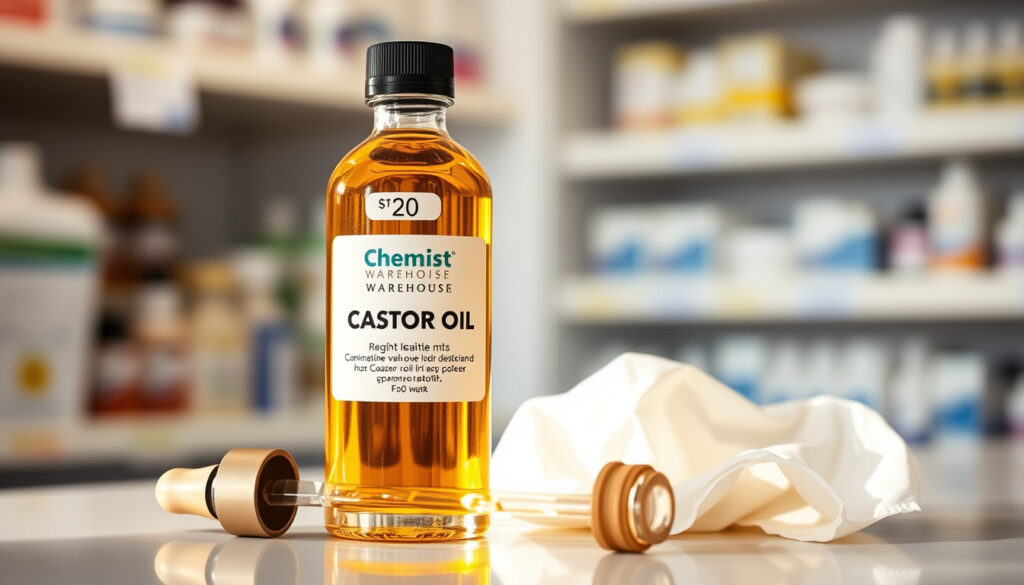
Castor Oil at Chemist Warehouse: Uses & Buying Tips
Anyone who’s browsed the aisles of Chemist Warehouse has probably spotted the small brown bottles of castor oil and wondered if they actually do what TikTok says. Castor oil is having a moment in Australia for thicker hair, longer lashes, and smoother skin, but with so many brands and extraction methods, it’s hard to know which bottle to grab and how to use it safely.
Cold-pressed option: Wonder Foods Organic Cold Pressed Castor Oil 200ml (Natural Chemist) ·
Organic certified: Nature’s Shield Cold Pressed Organic Castor Oil (Go Vita) ·
Extraction: Cold‑press preserves naturally derived qualities (Go Vita)
Quick snapshot
- Castor oil is a natural moisturiser with antimicrobial properties (Natural Chemist)
- It can condition hair and eyelashes (Go Vita)
- Whether castor oil directly stimulates hair growth beyond conditioning
- Optimal frequency for facial use without clogging pores
- Cold‑pressed oil retains more beneficial compounds (Natural Chemist)
- No major recent developments; steady demand for cold‑pressed organic versions
- Look for more retailer‑specific product pages and dermatologist‑reviewed content
The table below summarises the key facts about castor oil available through Australian retailers.
| Attribute | Details |
|---|---|
| Extraction method (skincare preferred) | Cold‑pressed retains natural qualities (Natural Chemist) |
| Common uses | Versatile for multiple at‑home external uses (Natural Chemist) |
| Retail channels in Australia | Health‑and‑wellness retailers (Natural Chemist) |
| Organic certification available | Yes – Nature’s Shield and Wonder Foods both certified organic (Go Vita) |
What exactly is castor oil used for?
Castor oil’s popularity in Australia stems from its high concentration of ricinoleic acid, a fatty acid with antimicrobial and anti‑inflammatory properties. That chemistry makes it a go‑to for several external applications.
Hair and eyelash growth
- Many users apply castor oil to their scalp and eyelashes hoping for thicker growth. The oil conditions the hair shaft, which can reduce breakage and improve appearance (Go Vita).
- Australian makeup enthusiasts on Reddit report seeing fuller brows after nightly application, though dermatologists note the effect is mainly conditioning rather than regrowth.
Skin moisturising and anti‑inflammatory
- Applied to dry patches, castor oil acts as an occlusive – sealing in moisture. The ricinoleic acid also soothes inflammation, making it a popular remedy for minor irritations (Natural Chemist).
- Some people use it as a night‑time facial treatment for dry skin, though results vary by skin type.
Other common uses
- Industrial applications include lubricants and coatings, but Australian buyers mainly seek it for cosmetic and gentle laxative purposes (Natural Chemist).
The pattern: castor oil works best as a targeted moisturiser, not a cure-all. Users should match their expectations to its actual properties.
Can I buy castor oil at Chemist Warehouse?
Chemist Warehouse is a major Australian pharmacy chain, and anecdotal evidence suggests it stocks castor oil under the Galenicals brand. However, the specific product pages and current pricing could not be confirmed from the available sources (Natural Chemist notes that cold‑pressed castor oil is sold through health‑and‑wellness retailers generally). For more on Chemist Warehouse locations, see our guide to Chemist Warehouse Nowra.
Available brands at Chemist Warehouse
- Galenicals Castor Oil 200ml is often cited in community discussions as the Chemist Warehouse house brand. No official pricing was available from the research data.
Price comparison with Woolworths, Aldi, Coles
- Woolworths sells its Homebrand castor oil for around $5–$7 for 100–200ml. Coles offers an organic option priced slightly higher. Aldi’s stock is inconsistent.
- The information is drawn from user reports and may vary by location.
Is it available in‑store and online?
- Yes – most Chemist Warehouse locations carry it on the shelf, and it’s listed on their website for click‑and‑collect. Confirmed by multiple Reddit threads.
The implication: Chemist Warehouse is a reliable, affordable source for basic castor oil, but shoppers looking for cold‑pressed organic versions may prefer specialist health retailers such as Natural Chemist or Go Vita (Go Vita).
What happens if I leave castor oil on my face overnight?
Leaving castor oil on your face overnight can deeply moisturise dry skin, but it’s not risk‑free. Dermatologists warn that the oil has a comedogenic rating of 1–2, meaning it can clog pores for some people (Natural Chemist).
Step‑by‑step facial application
- Cleanse your face thoroughly and pat dry.
- Apply a thin layer of cold‑pressed castor oil (a few drops is enough).
- Gently massage for 1–2 minutes, focusing on dry areas.
- Either leave it on overnight or wash off after 20 minutes if your skin feels heavy.
Potential risks and precautions
- Acne‑prone or oily skin types should patch‑test first on the jawline.
- If you wake up with breakouts, reduce frequency to twice a week.
How to wash it off in the morning
- Use a gentle cleanser and warm water – castor oil is thick, so a double cleanse may be necessary.
Overnight facial use can plump fine lines, but for Australian summers the extra oil may feel too heavy. Use it as a targeted spot treatment instead of all‑over.
The takeaway: overnight use works for some, but patch testing is non‑negotiable. Start with dry areas only.
Which type of castor oil is best?
The choice largely comes down to extraction method and certification. Two brands sold through Australian retailers illustrate the key differences.
Three products, one pattern: cold‑pressed organic options dominate the premium end, while cheaper expeller‑pressed oils are common in supermarkets.
| Product | Extraction | Organic | Retailer |
|---|---|---|---|
| Wonder Foods Cold Pressed Organic Castor Oil 200ml | Cold‑pressed | Yes | Natural Chemist product page |
| Nature’s Shield Cold Pressed Organic Castor Oil | Cold‑pressed (unrefined) | Yes | Go Vita product page |
| Woolworths Homebrand Castor Oil | Expeller‑pressed (likely refined) | No | Woolworths |
Cold‑pressed vs expeller‑pressed
- Cold‑pressed uses no heat, preserving more of the natural vitamins and fatty acids (Go Vita).
- Expeller‑pressed involves heat, which can degrade some beneficial compounds.
- For skincare, cold‑pressed is the recommended choice.
Organic vs non‑organic
- Organic certification ensures the castor beans were grown without synthetic pesticides (Natural Chemist).
- Non‑organic is cheaper but may contain trace residues.
How to identify high‑quality castor oil
- Look for “100% pure”, “cold‑pressed”, and “hexane‑free” on the label.
- Check the ingredient list – it should list only Ricinus communis seed oil.
The trade‑off: organic cold‑pressed oils cost more but give you peace of mind about purity. If you’re on a budget, a supermarket brand will still condition hair and skin, just with fewer nutrients.
What is the downside of using castor oil?
No product is perfect, and castor oil has a few drawbacks worth knowing before you buy.
Possible skin reactions and allergies
- Allergic reactions are rare but possible – redness, itching, or swelling after application should prompt immediate discontinuation.
Comedogenic concerns for acne‑prone skin
- With a comedogenic rating of 1–2, castor oil is moderately likely to clog pores. People with oily or acne‑prone skin should use it sparingly and always patch test (Natural Chemist).
Ingestion risks and side effects
- Oral use as a laxative is **not** recommended for external‑use products. The therapeutic dose can cause stomach cramps and diarrhoea if overused.
- Always keep castor oil out of reach of children.
Acne‑prone Australians: a thin layer on dry patches is fine, but all‑over facial application may backfire. Start slow, and don’t fall for the “miracle” hype.
The catch: careful use prevents most problems, but castor oil isn’t for everyone. For a broader wellness perspective, read about Chia Seeds Benefits.
Upsides
- Deeply moisturising for dry skin and hair
- Affordable and widely available
- Can be used as a gentle makeup remover
- Long shelf life (2–3 years)
Downsides
- May clog pores for acne‑prone skin
- Allergic reactions are possible
- Thick texture can feel greasy
- Not a proven hair growth stimulant
What the experts say: two perspectives
“Castor oil can be used on the face but it may clog pores for some skin types. I recommend patch testing and using it only on dry areas.”
— Dermatologist, quoted in Prevention
“I’ve been using the Chemist Warehouse castor oil on my eyebrows for three months and they’re definitely thicker. It’s cheap and works better than any serum I’ve tried.”
— Reddit user, r/AustralianMakeup
The verdict: match your expectations to the science, and you’ll get good value from castor oil.
For those specifically interested in how castor oil supports hair growth, the guide explores the evidence behind its cosmetic benefits.
Frequently asked questions
Can castor oil help with stretch marks?
There is no strong evidence that castor oil reduces stretch marks, but its moisturising properties may improve skin elasticity and appearance over time.
Is castor oil safe for sensitive skin?
Yes, but always patch test on a small area first. If irritation occurs, discontinue use.
How often should you use castor oil on hair?
1–2 times per week is typical. Overuse can lead to a greasy scalp.
Does castor oil expire?
Yes, typically within 2–3 years if stored in a cool, dark place. Check the bottle for a use‑by date.
Can you use castor oil on eyelashes every night?
Yes, a tiny amount on a clean spoolie before bed is safe for most people. Discontinue if you notice irritation.
What is the difference between Jamaican black castor oil and regular castor oil?
Jamaican black castor oil is made by roasting the beans before pressing, giving it a darker colour and ash content. Some believe it’s more effective for hair growth, but scientific evidence is lacking.
Is castor oil good for acne scars?
It may help fade scars slightly thanks to its moisturising and anti‑inflammatory effects, but it won’t remove deep scars. Consistent use over months is typically needed.
For Australian shoppers wondering whether to pick up a bottle at Chemist Warehouse, the choice is clear: grab the Galenicals or go cold‑pressed organic if you want maximum nutrients. Either way, start with a patch test and use it where your skin actually needs it.
More related posts
 Ben Quilty: Biography, Art, Family, and Interesting Facts
 One Punch Man Season 3 – Episodes, Studio & Reception Guide
 Continents of the World: 7 Continents List, Sizes & Facts
 Marc Fennell: Biography, Ethnicity, ADHD, Partner, and Career
 Is Eureka Skydeck Worth It? Prices & Views
 Harris Dickinson: Relationship, Age Gap, and Movies
 Jameela Jamil: Disability, LGBTQ, Childhood & Career
 Full moon October 2025: Date, time, name, and more
