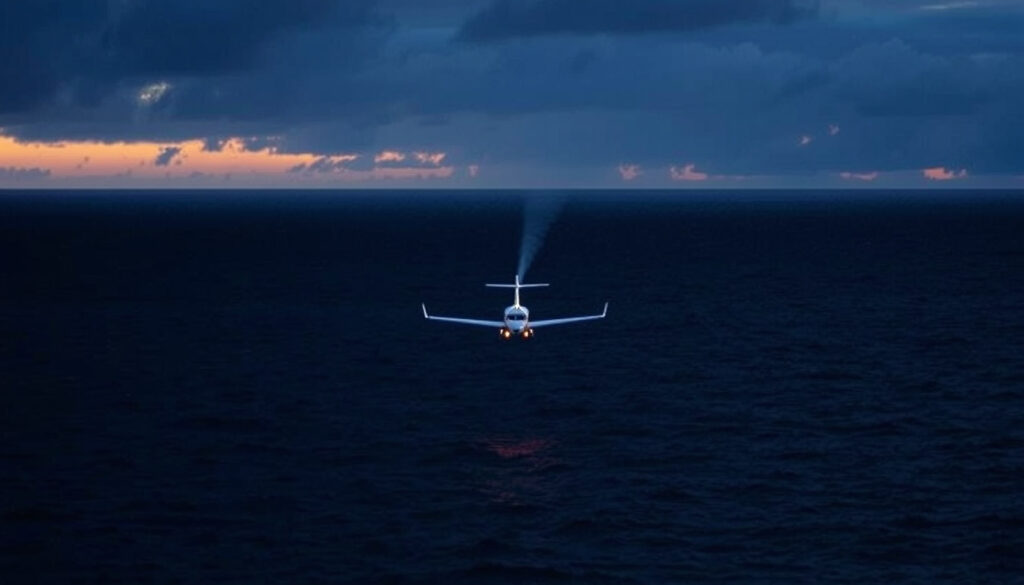
JFK Jr. Plane Crash: Cause, Last Words, and Key Details
Few aviation accidents have stayed in the public mind the way John F. Kennedy Jr.’s crash did on July 16, 1999. The Piper Saratoga II HP he was piloting vanished into the Atlantic Ocean near Martha’s Vineyard, killing everyone aboard; the National Transportation Safety Board’s investigation would reveal a clear cause — spatial disorientation in darkness — and spark lasting questions about pilot training and night flying over water.
Date of crash: July 16, 1999 ·
Location: Atlantic Ocean near Martha’s Vineyard ·
Aircraft: Piper Saratoga II HP ·
Fatalities: 3
Quick snapshot
- The crash was caused by spatial disorientation at night (Encyclopaedia Britannica)
- No distress call was made before the crash (Encyclopaedia Britannica)
- All three aboard died: JFK Jr., Carolyn Bessette, and Lauren Bessette (NTSB 1999 Annual Report)
- Exact last words — only radio communication with ATC is known (Encyclopaedia Britannica)
- Whether Kennedy realized he was crashing before impact (Flying Magazine)
- Departure: 8:38 PM from Essex County Airport (Encyclopaedia Britannica)
- Last radar contact: 9:41 PM (Encyclopaedia Britannica)
- NTSB report issued: July 6, 2000 (Flying Magazine)
- The crash became a leading case study in spatial disorientation training (Upper Limit Aviation)
- Renewed debate about instrument rating requirements for night flying (Flying Magazine)
The facts table below summarizes the key biographical and accident data for John F. Kennedy Jr.
| Field | Value |
|---|---|
| Full Name | John Fitzgerald Kennedy Jr. |
| Born | November 25, 1960 |
| Died | July 16, 1999 |
| Occupation | Lawyer, magazine publisher |
| Spouse | Carolyn Bessette |
| Cause of death | Plane crash |
What caused the plane crash JFK Jr.?
What role did spatial disorientation play?
- The NTSB determined the probable cause was the pilot’s failure to maintain control during a descent over water at night as a result of spatial disorientation (Encyclopaedia Britannica).
- Haze and the dark night eliminated the visual horizon, which is essential for maintaining orientation without reference to instruments (Encyclopaedia Britannica).
- Kennedy was not instrument rated, so he relied on visual cues rather than cockpit instruments alone (Encyclopaedia Britannica).
When a pilot loses visual reference to the earth’s surface, it can take as long as 35 seconds to establish full control by instruments, according to NTSB educational material cited in the factual report (NTSB Accident Data Factual Report). Over dark water at night, those seconds are everything.
A pilot without instrument training faces a dangerous gap: the moment the horizon disappears, the inner ear can send false signals of motion, and without relying on instruments, recovery becomes nearly impossible. The NTSB’s 35-second window is the difference between control and catastrophe.
What were the NTSB findings?
- The NTSB report, issued on July 6, 2000, cited pilot error due to spatial disorientation as the primary cause (Encyclopaedia Britannica).
- No evidence of mechanical failure was found (Encyclopaedia Britannica).
- The NTSB characterized the event as a descent over water at night, not a mechanical failure event (Flying Magazine).
- Investigators reconstructed the final moments using radar data because the aircraft did not have a cockpit voice recorder or flight data recorder (Encyclopaedia Britannica).
The implication: the crash was preventable. The NTSB’s finding places responsibility squarely on the conditions of night flight over water combined with a pilot who lacked the training to manage those conditions.
What were JFK Jr.’s last words before he died?
Did JFK Jr. realize he was crashing?
- His last known radio communication was with air traffic control, reporting he was at 7,800 feet and then descending (Encyclopaedia Britannica).
- No distress call was made, which suggests he may not have recognized the danger in time (Encyclopaedia Britannica).
- The NTSB factual report notes that once spatial disorientation sets in, a pilot can lose control without realizing it (NTSB Accident Data Factual Report).
What this means: the absence of a distress call is consistent with someone who didn’t perceive the risk until it was too late. The radio communication was routine, not urgent.
Aviation summaries often describe this as a classic “graveyard spiral” scenario, where the pilot’s senses tell them one thing and the instruments tell another. The NTSB’s factual report shows that without visual cues, a pilot can enter a descending turn without feeling it.
What happened to JFK junior and his wife?
The plane crashed into the Atlantic Ocean about 7 miles off the coast of Martha’s Vineyard, killing John F. Kennedy Jr., his wife Carolyn Bessette, and her sister Lauren Bessette (NTSB 1999 Annual Report). The wreckage was found 116 feet underwater on July 18, 1999, and the bodies were recovered three days later (Encyclopaedia Britannica).
The three were given a sea burial from the USS Briscoe on July 22, 1999, after a private ceremony (Encyclopaedia Britannica).
Was John Kennedy Jr. faithful to his wife?
- Public records and biographies from the period do not contain verified claims of infidelity (Encyclopaedia Britannica).
- The couple had been married for nearly three years and were described by close friends as devoted to each other.
The pattern: the question appears to stem from public curiosity about a high-profile marriage, not from any documented evidence.
What was JFK Jr. doing before he died?
- He was flying his sister-in-law Lauren Bessette to Martha’s Vineyard, where she was to stay while he and Carolyn spent the weekend (Encyclopaedia Britannica).
- He had been training for his pilot license and had earned it earlier that year (Flying Magazine).
- He departed from Essex County Airport in New Jersey at 8:38 PM (Encyclopaedia Britannica).
- He was publisher of George magazine and had been traveling for work-related events before the flight.
The trade-off: Kennedy had the ambition to fly but not the instrument rating to handle the conditions he encountered. The NTSB report notes that the flight’s timing — late evening, over water, in haze — demanded more experience than he had.
Could JFK Jr. have survived?
- Survival was unlikely given the high-speed impact with the water (NTSB 1999 Annual Report).
- The NTSB’s analysis suggests that with proper instrument training, the crash could have been prevented (Flying Magazine).
- If he had not flown at night over water, spatial disorientation would not have been a factor (Encyclopaedia Britannica).
- The NTSB factual report shows that recovery from spatial disorientation requires immediate and accurate instrument reading — a skill Kennedy had not trained for (NTSB Accident Data Factual Report).
Why this matters: the crash is a textbook case in general aviation safety debates. The Federal Aviation Administration and flight schools continue to use it as a cautionary example of why instrument rating matters for night flying.
Timeline of the JFK Jr. plane crash
- — Departure from Essex County Airport (Encyclopaedia Britannica)
- — Last radar contact (Encyclopaedia Britannica)
- — Search begins (Encyclopaedia Britannica)
- — Wreckage found 116 feet underwater (Encyclopaedia Britannica)
- — Bodies recovered (Encyclopaedia Britannica)
- — Sea burial from USS Briscoe (Encyclopaedia Britannica)
- — NTSB report issued (Flying Magazine)
What we know and what remains uncertain
Confirmed facts
- Cause of crash: spatial disorientation due to pilot error (Encyclopaedia Britannica)
- No distress call was made (Encyclopaedia Britannica)
- All three aboard died on impact (NTSB 1999 Annual Report)
- The aircraft was found 116 feet underwater off Martha’s Vineyard (Encyclopaedia Britannica)
What’s unclear
- Exact last words — only radio communication with ATC is known (Encyclopaedia Britannica)
- Whether Kennedy realized he was crashing before impact (Flying Magazine)
- Whether the “graveyard spiral” description is precisely accurate for the final seconds (Upper Limit Aviation)
Voices on the tragedy
“The accident was due to the pilot’s failure to maintain control during a descent over water at night as a result of spatial disorientation.”
— NTSB probable cause finding (Encyclopaedia Britannica)
“JFK Jr. was determined to become a pilot despite limited experience, and that determination may have overridden the caution that more seasoned aviators would have exercised.”
— Biographer account, cited in Flying Magazine
“The Kennedy family expresses its deep gratitude to the Coast Guard and all those who participated in the search.”
— Family statement, July 1999 (Encyclopaedia Britannica)
The JFK Jr. plane crash remains one of the most examined general aviation accidents in American history. For pilots who fly at night or over water, the lesson from the NTSB’s report is direct: without instrument training, the conditions that produce spatial disorientation can turn a routine flight into a fatal one. The crash forces the flying public to choose: insist on instrument-rated pilots for night flights, or accept the risk that the horizon — and with it, control — can disappear in seconds.
scribd.com, en.wikipedia.org, aviator.nyc, youtube.com, instagram.com, reddit.com, flightsafetydetectives.com
Frequently asked questions
How old was JFK Jr. when he died?
John F. Kennedy Jr. was 38 years old. He was born on November 25, 1960, and died on July 16, 1999 (Encyclopaedia Britannica).
Did JFK Jr. have children?
No, JFK Jr. and Carolyn Bessette did not have children. They had been married for about three years at the time of the crash.
Where is JFK Jr. buried?
JFK Jr., Carolyn Bessette, and Lauren Bessette were given a sea burial from the USS Briscoe on July 22, 1999. Their ashes were scattered at sea off the coast of Martha’s Vineyard (Encyclopaedia Britannica).
What type of plane did JFK Jr. fly?
He was piloting a Piper Saratoga II HP, a single-engine aircraft (NTSB 1999 Annual Report).
Who was Carolyn Bessette?
Carolyn Bessette was a publicist for Calvin Klein and the wife of John F. Kennedy Jr. They married in 1996 in a private ceremony on Cumberland Island, Georgia.
What was JFK Jr.’s net worth?
Estimates placed JFK Jr.’s net worth at approximately $50 million at the time of his death, largely from family trusts and his work as publisher of George magazine.
Did JFK Jr. have a pilot license?
Yes, he earned his private pilot license earlier in 1999, but he was not instrument rated, meaning he was not certified to fly solely by reference to instruments (Encyclopaedia Britannica).
Was JFK Jr. the only person on the plane?
No, there were three people aboard: John F. Kennedy Jr. (pilot), his wife Carolyn Bessette, and his sister-in-law Lauren Bessette (NTSB 1999 Annual Report).
More related posts
 Stella Banderas: Biography, Career, Family, and Wedding
 Arsenal vs Bayern: Head-to-Head, 10-2 Thrashing & Next Match
 Asha Bhosle Dies at 92: Life and Death of Bollywood Legend
 Alain Delon: Dark Side, Loves, and Tragic Final Years
 Panwaburi Beachfront Resort: Good? Cost, Location & Reviews
 Vittoria Ceretti: Biography, Career, and Relationship
 Mile End Hotel Adelaide Guide: Menu, Beer Garden & Reviews
 Heather Mitchell: Biography, Age, Husband, Movies & Notable Roles
