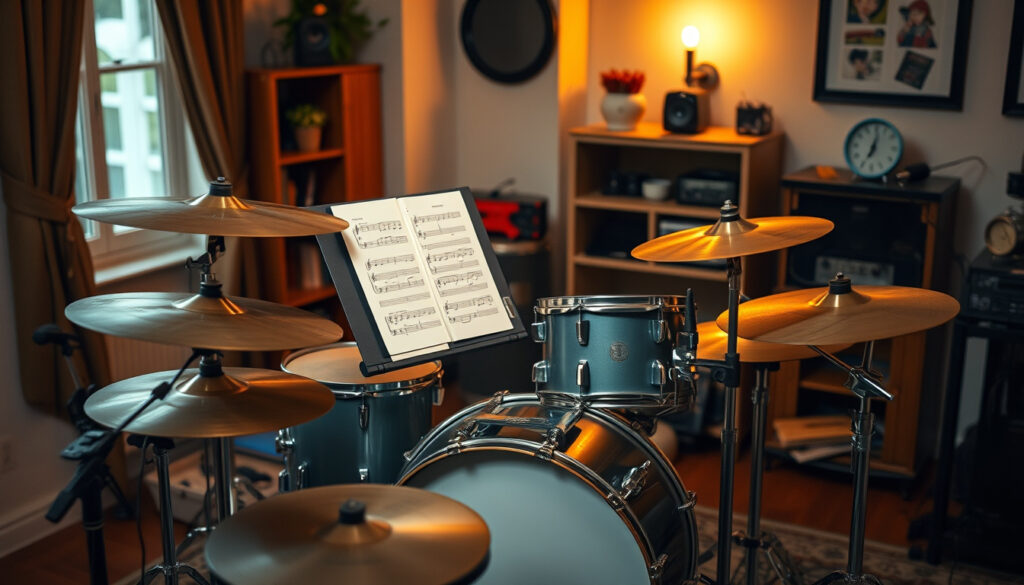
Drum Set Cost & Buying Guide: Is It Too Late to Start? (2026)
There’s a moment in almost every music lover’s life when the idea of sitting behind a drum set crosses the mind. It usually happens during a favorite song, when the beat just clicks — and that curiosity doesn’t fade with age.
Average cost of a beginner drum set: $300–$500 ·
Typical number of pieces in a standard kit: 5 ·
Percentage of drummers who start after age 30: ~25% ·
Estimated annual maintenance cost (sticks, heads, etc.): $100–$200 ·
Most common age range for new drummers: 8–18
Quick snapshot
- Drumming can be learned at any age (Greater Toronto Music School, music education provider).
- Beginner drum sets cost $300–$500 (Angeles Academy of Music, music school).
- The 80/20 rule is a general productivity principle (Wikipedia, encyclopedia).
- Drummer’s syndrome is a repetitive strain injury affecting the hands and wrists (Drumming Injury Resource, community health site).
- Exact cost of a “good” drum set depends on brand, region, and retail markup.
- The effectiveness of the 80/20 rule varies by individual playing style.
- Long-term health effects of drumming on older beginners are not well-studied.
- No fixed timeline exists; learning pace depends on practice frequency and goals.
- Most beginners see noticeable progress within 3–6 months of regular practice.
- Choose a kit based on budget and space.
- Invest in quality kick, snare, hi-hat, and ride cymbal first.
- Consider lessons or online resources to build fundamentals.
Here is a quick reference for the most important numbers every beginner should know.
| Average cost of a beginner drum set | $400 |
| Standard drum set configuration | 5-piece (bass drum, snare, hi-hat, 2 toms, ride cymbal) |
| Drum head replacement frequency | Every 3–6 months for regular players |
| Most common wood for drum shells | Maple |
| Age range of beginner drummers | 8–60+ |
How much does a good drum set cost?
What is the price range for a decent drum set?
- Beginner acoustic kits: $300–$700 (Greater Toronto Music School).
- Entry-level electronic kits: $400–$800 (same source).
- Intermediate kits: $700–$1,500 (Rhythm Notes, drum education site).
- Professional kits start at $2,000.
A $500 budget is a solid starting point for either acoustic or electronic drums, according to the Angeles Academy of Music.
The implication: you don’t need to spend a fortune to get a playable instrument. The real cost is in the commitment to practice.
How much does a drum set for kids cost?
- Reputable-brand kids kits (ages 3–7) in the $150–$400 range are genuinely playable instruments, not toys (Drumbeats Online, parenting drum guide).
- Kits under $80 are often low quality and may go out of tune quickly.
- For ages 8 and up, a scaled-down 5-piece kit works well.
How much does a drum set for adults cost?
- Full-size acoustic kits: $300–$3,000+ (Rhythm Notes).
- Electronic kits: $400–$2,000+.
- Used kits can save 30–50% (Melodics, music learning platform).
What is the difference in cost between acoustic and electronic drum sets?
Acoustic sets are generally cheaper upfront for equivalent quality, but electronic sets require less soundproofing and can be played with headphones. The Drumeo Beat lists the Roland TD1-DMK electronic kit at $549 and the Pearl Roadshow acoustic kit at $659 — both viable beginner options.
Acoustic gives you raw feel and volume; electronic gives you quiet practice and built-in sounds. Choose based on your living situation, not your budget alone.
The pattern: your living arrangement should drive the decision — acoustic for houses with tolerant neighbors, electronic for apartments or shared walls.
What is the best drum set to get?
What is the best drum set for beginners?
- Top brands: Roland, Yamaha, Pearl, Ludwig, Mapex.
- A 5-piece kit with cymbals is recommended (Greater Toronto Music School).
- The Pearl Roadshow ($659) is a Drumeo top pick for acoustic beginners (Drumeo Beat).
- The Alesis Command Mesh ($799) offers a bigger snare and more sounds for electronic beginners.
What is the best drum set for kids?
- Junior 3-piece or 4-piece kits for ages 3–7, scaled-down 5-piece for ages 8+ (Drumbeats Online).
- Look for height-adjustable throne and responsive pedals.
What is the best drum set for adults?
- Full-size 5-piece acoustic with maple shells for warm sound.
- Electronic kits like the Roland TD1-DMK for apartment-friendly practice.
- Consider a shell pack (drums only) if you already own hardware (Melodics).
What factors should I consider when choosing a drum set?
- Space: acoustic kits need room and soundproofing.
- Noise tolerance: electronic kits allow silent practice.
- Sound quality: wood shells (maple, birch) vs. acrylic.
- Expandability: 5-piece kits can be upgraded with extra toms and cymbals.
The pattern: your choice should match your environment first, then your budget. A quiet home with tolerant neighbors makes acoustic a joy; an apartment makes electronic a necessity.
Is drumming an expensive hobby?
What are the initial costs of starting drumming?
- Kit: $300–$2,000 depending on quality.
- Accessories: sticks ($10–$20 per pair), throne ($30–$100), pedal ($50–$200).
- Lessons: $30–$60 per hour.
What ongoing costs should I expect?
- Drum heads: $15–$50 each, replace every 3–6 months.
- Sticks: break every few weeks for heavy players.
- Maintenance: tuning tools, replacement parts, possible repairs.
How can I save money on drum gear?
- Buy used: kits can be 30–50% cheaper (Melodics).
- Start with a practice pad ($20–$50) to build basic technique.
- Focus on the 80/20 rule: invest in kick, snare, hi-hat, ride first.
Is drumming more expensive than other hobbies?
Compared to golf ($1,000+ initial), photography ($1,500+), or cycling ($2,000+), drumming is mid-range. The key is that ongoing costs are moderate, and you can play for years without major upgrades.
Drumming is not cheap, but it’s not prohibitive. A $500 initial investment and $100–$200 annual maintenance puts it within reach of most households.
What this means: for the price of a used video game console, you can start a rhythm practice that lasts a lifetime.
What is the 80/20 rule for drummers?
How does the 80/20 rule apply to drumming?
The Pareto principle — 80% of the sound comes from 20% of the gear — is a guiding idea for drummers who want to maximize tone without spending on everything. Wikipedia documents the principle as a general productivity observation, and drum educators have adapted it to the kit.
Which drum components should I prioritize?
- Kick drum and snare: they carry the backbone of the beat.
- Hi-hat and ride cymbal: they provide the rhythmic foundation.
- Extra toms and crash cymbals: add flavor but not essential early on.
As one music retailer puts it: “Invest in your kick and snare first; they do the heavy lifting in most music.”
How can I use the 80/20 rule to save money on gear?
- Buy a basic 5-piece kit and upgrade the snare drum first.
- Get a quality hi-hat stand and pedal before adding extra cymbals.
- Skip the second crash cymbal until you’re sure you need it.
The catch: the 80/20 rule is a starting point, not a law. Some players thrive on lots of toms and cymbals. But for beginners, it’s a smart way to avoid overspending.
What age is too old to learn the drums?
Is 16 too late to start drums?
No. Many professional drummers started in their teens. The Greater Toronto Music School notes that drumming can be learned at any age, and 16 is well within the common range.
Is 40 too old to learn drums?
Absolutely not. According to the Drumbeats Online guide, drummers over 40 bring better focus and discipline. The physical challenges can be managed with proper technique and regular stretching.
Can adults learn drums effectively?
- Yes, adults often learn faster because they can afford lessons and practice efficiently.
- Older learners may have better hand-eye coordination from life experience.
- Physical limitations (joint stiffness, hearing) can be addressed with ergonomic setups and ear protection.
What are the benefits of starting drums later in life?
- Stress relief and mental stimulation.
- Social connection through bands or jam sessions.
- Sense of accomplishment and creative expression.
Why this matters: the biggest barrier to learning drums is not age — it’s believing you’re too old. The data shows that beginners in their 50s and 60s succeed when they commit to regular practice.
“It’s never too late to pick up sticks; the joy of rhythm is timeless.”
— Experienced drum teacher
“Invest in your kick and snare first; they do the heavy lifting in most music.”
— Music retailer
Specifications: What to look for in a beginner drum set
One key spec to understand: the number of pieces matters less than the quality of the most-used components.
| Specification | Beginner Sweet Spot | Why It Matters |
|---|---|---|
| Number of pieces | 5-piece (bass, snare, 3 toms) | Standard configuration for most music styles |
| Shell material | Maple or poplar | Maple offers warm tone; poplar is lighter and cheaper |
| Hardware | Double-braced stands | Durability and stability for heavy playing |
| Cymbals included | Yes (hi-hat, crash, ride) | All-in-one kits save money and hassle |
| Drum heads | Remo or Evans coated | Better sound and durability |
| Throne (stool) | Height-adjustable, padded | Comfort prevents back pain |
| Pedal | Chain-drive single pedal | Reliable and responsive for beginners |
| Finish | Lacquer or wrap | Protects shell and affects resonance |
Upsides
- Wide price range fits any budget.
- Learnable at any age with proper guidance.
- Low ongoing costs compared to many hobbies.
- Electronic options for quiet practice.
- Strong community and online resources.
Downsides
- Acoustic kits require space and soundproofing.
- Initial investment can be $300–$2,000.
- Regular maintenance needed (heads, sticks).
- May be physically demanding for older beginners.
- Cheap kits under $80 are often unplayable.
Related reading: Rob Zombie Biography: Music, Movies, and Personal Life · James Johnston: Australian Country Singer Biography & Songs
hluru.net, reddit.com, reddit.com, musical-u.com, americanmusical.com, the8020drummer.com
Frequently asked questions
What is the Irish drum called?
The Irish drum is called a bodhrán (pronounced bow-rawn). It’s a frame drum played with a double-ended stick, commonly used in Irish folk music. Wikipedia describes it as a traditional Celtic instrument.
What is the best drum set for a child?
For ages 3–7, a junior 3-piece kit from a reputable brand like Ludwig or Pearl (cost $150–$400) is recommended. For ages 8+, a scaled-down 5-piece kit works well. Look for height-adjustable throne and responsive pedals.
Should I buy an acoustic or electronic drum set?
Acoustic sets offer authentic feel and dynamics but require space and soundproofing. Electronic sets allow quiet practice with headphones and built-in sounds. Choose based on your living situation.
How often should I replace drum heads?
Every 3–6 months for regular players. Signs include dents, loss of resonance, or difficulty tuning. Replace more often if you play heavily.
Can I learn drums online?
Yes. Platforms like Drumeo and Melodics offer structured lessons. Online learning is effective if you practice consistently and use a practice pad or muted kit.
What is the difference between a 4-piece and 5-piece drum set?
A 4-piece has bass, snare, one rack tom, and one floor tom. A 5-piece adds a second rack tom. Most beginners start with a 5-piece for versatility.
What is drummer’s syndrome?
Drummer’s syndrome is a term used to describe repetitive strain injuries affecting the hands and wrists, often from overplaying without rest. Prevention includes proper technique, warm-ups, and regular breaks. Drumming Injury Resource offers guidance on prevention.
Drumming is a hobby that rewards patience, not age or budget. The 80/20 rule helps you invest wisely, and the data shows that beginners from 8 to 60 can start with confidence. For the adult who’s been eyeing a kit but hesitating, the choice is clear: buy a used 5-piece, focus on the kick and snare, and give yourself three months of weekly practice — or wonder what that beat could have sounded like.
More related posts
 Hamiso Tabuai-Fidow: Age, Speed & Why He’s the Hammer
 Free Credit Score Check Ireland: Guide to Score Improvement
 Mara Lejins: The New Chaser on The Chase Australia
 Cyclone Alfred Forecast: Path, Category and Safety
 Sweet and Sour Chicken Recipe: Easy Crispy Takeaway Style
 Melbourne Cup Horses 2026: Full List, Odds & Predictions
 Tim Wilson: Politician, Comedian, Academic – Who’s Who
 John Ratzenberger: Pixar’s Good Luck Charm and Voice Roles
